
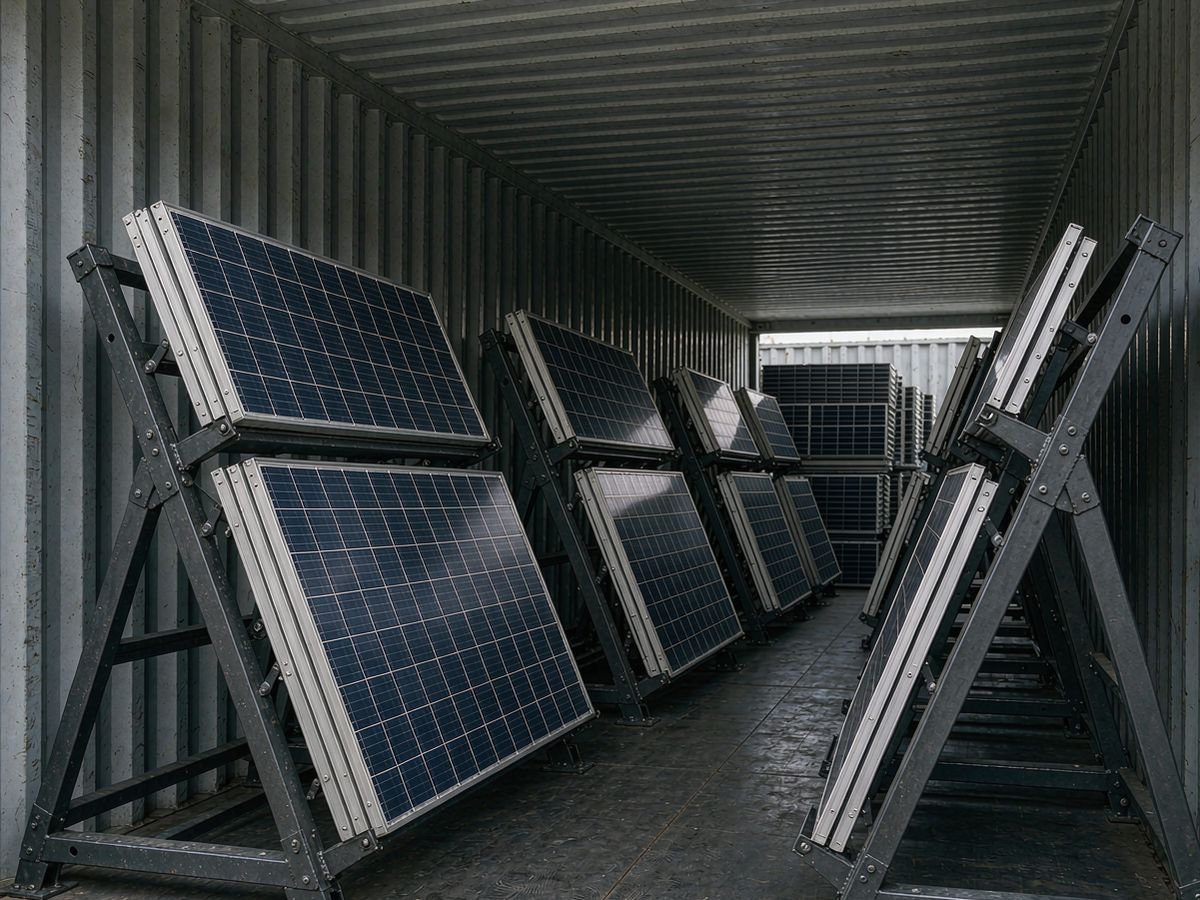
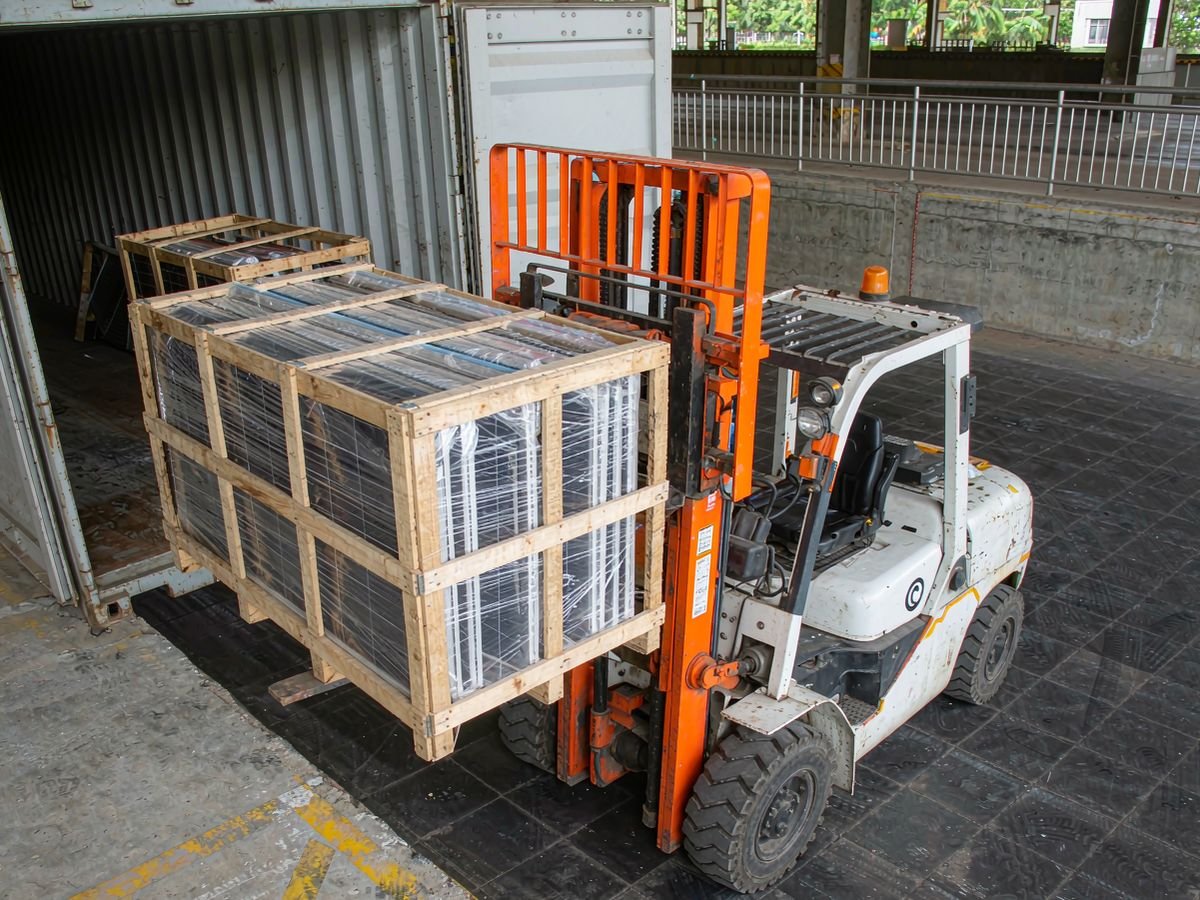
Most first-time solar importers lose money on logistics, not on the factory deal. A container that is under-utilized wastes freight; a container that is badly loaded delivers cracked glass, scratched frames and water-damaged junction boxes — plus demurrage while the dispute unfolds. Here is what good practice looks like.
Shipping Solar Panels by Container: Container Capacity Math
| Container | Volume | Typical load (550W mono) | Best for |
|---|---|---|---|
| 20GP | ~28 m³ | 80–96 palletized panels | Sample and small orders |
| 40HQ | ~68 m³ | 264–336 panels ≈ 158 kW | Bulk orders, 50kW–5MW projects |
| 40GP | ~58 m³ | Slightly below 40HQ | When 40HQ is unavailable |
| Flat rack | Open top/side | Oversize or 700W+ formats | Very large bifacial modules |
When shipping solar panels by container, the loading math decides your landed cost per watt. Worked example: a 550W panel measures 2278×1134×35 mm. Twelve panels per pallet with corner protectors and a heat-treated ISPM-15 base come to roughly 1.7 m³; a 40HQ takes 24 such pallets — about 288 panels, 158 kW, and 60% volume utilization. Bifacial 700W glass-glass modules pack fewer per pallet but run heavier, landing near 154–182 kW per box.
Packaging That Survives the Ocean
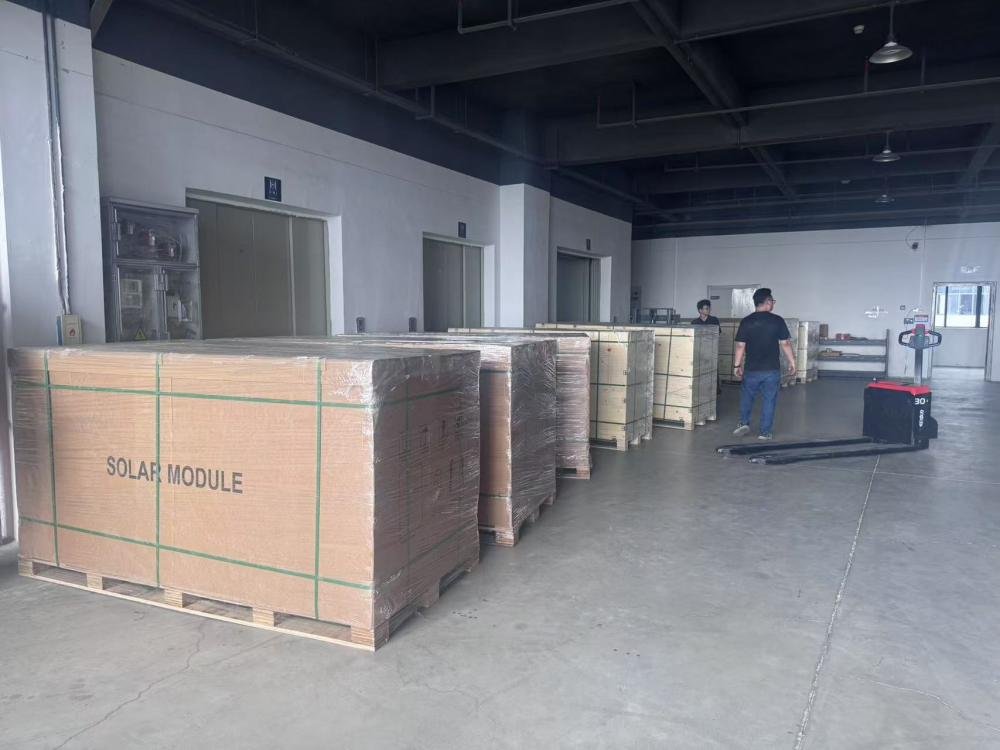
Installed, a panel shrugs off 2,400 Pa of wind load — but in transit it lies flat and takes vibration and stacking pressure it was never designed for. Export-grade packing stacks six layers of protection: a 5-ply corrugated outer carton with edge protectors, EPE foam corners and cardboard dividers between panels, an ISPM-15 heat-treated pallet, 3–4 layers of stretch wrap, vertical steel strapping, and a top cap to distribute stacking weight. Thin 30 mm bifacial modules should cap at 20 panels per pallet; 35 mm standard modules at 24.
The Loading Checklist
- Inspect the box an hour before loading — reject containers with residue, water stains, holes or odour. A dry container prevents most water damage.
- Hang 10–20 kg of desiccant on the walls; essential on West Africa and Southeast Asia routes.
- Protect the floor with cardboard or battens against condensation.
- Load pallets in a brick pattern, offset rather than stacked column-style, so weight distributes.
- Fill gaps with inflatable dunnage bags — one or two per container.
- Lash the first and last pallet rows to the container's rings.
- Seal with a numbered bolt seal and record it on the bill of lading.
For orders above $50,000, book a pre-shipment inspection (SGS or TÜV, roughly $200–500) and have the inspector witness loading and open one or two finished cartons. A professional load takes 1.5–3 hours per 40HQ.
Damage Benchmarks and the Usual Suspects
Across our export record, container-shift glass breakage leads the damage statistics at roughly 45% of claims, followed by road-vibration microcracks (20%), condensation damage to junction boxes (15%), frame bending from over-stacking (10%), surface scratching (5%), forklift punctures (3%) and label loss (2%). Accept 0.5–1.5% damage as normal; above 3% signals a packaging or logistics problem; above 5% means change something structural.
2026 Freight Rates and Realistic Lead Times
| Route (per 40HQ) | Rate | Transit |
|---|---|---|
| China → West Africa (Lagos) | $4,000–6,500 | 35–50 days + 7–14 port days |
| China → Southeast Asia | $800–1,800 | 7–12 days |
| China → Middle East | $1,800–3,000 | 18–25 days |
| China → Europe (North) | $4,500–7,000 | 28–35 days |
| China → US West Coast | $3,500–5,500 | 18–25 days |
| China → South America (East) | $5,500–8,000 | 35–45 days |
Order-to-door for a typical African project runs 52–81 days: 7–10 days production, 35–50 at sea, then customs and inland legs. Q4 peak season adds 7–15 days and 30–50% to rates, so plan Q4 deliveries by ordering 60–90 days ahead. Every Mars Solar container we handle for shipping solar panels by container ships with supervised loading, photographic load reports, complete documentation (commercial invoice, packing list, certificate of origin, test reports) and HS code 8541.43 verified against your tariff schedule — ask us for a CIF quote to your port.