
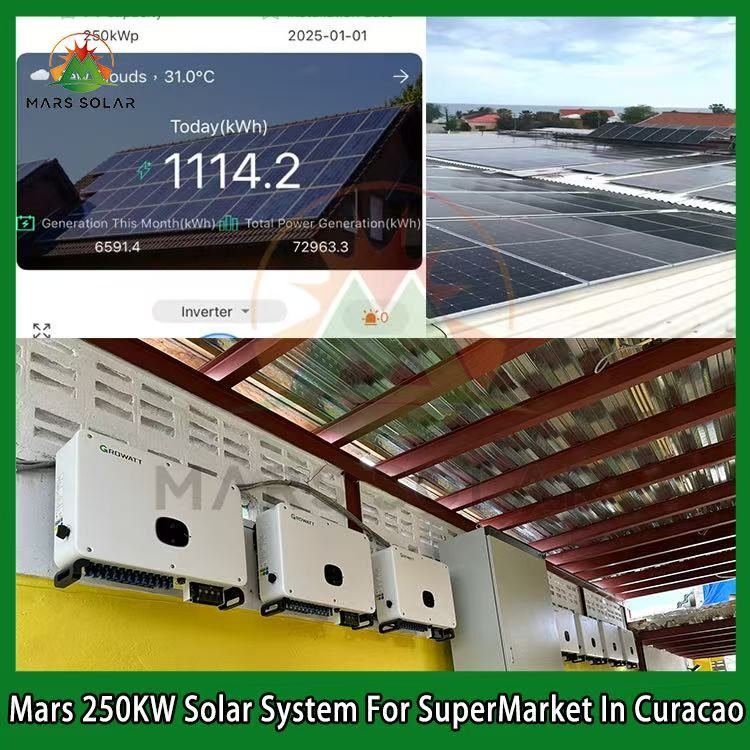
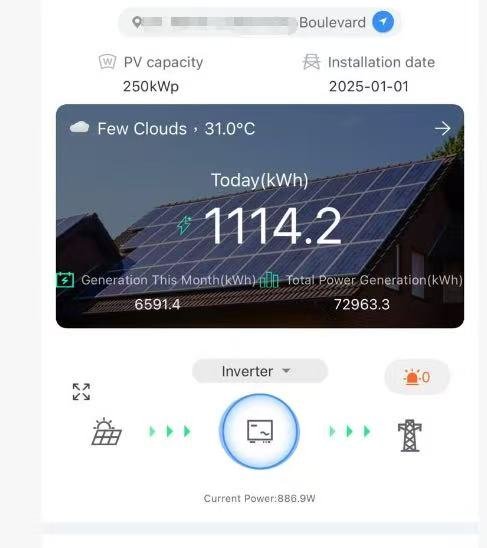
This supermarket in Willemstad runs refrigeration around the clock — the single largest energy consumer in Caribbean retail. With Curaçao's island grid generating almost all electricity from imported fossil fuels, commercial tariffs reached $0.38/kWh, among the highest in the world. Monthly electricity bills exceeded $14,000.
Refrigeration must never fail: a 2-hour outage can spoil tens of thousands of dollars in inventory. The supermarket needed to slash energy costs while guaranteeing backup power for cold-chain loads — in a hurricane-prone island environment.
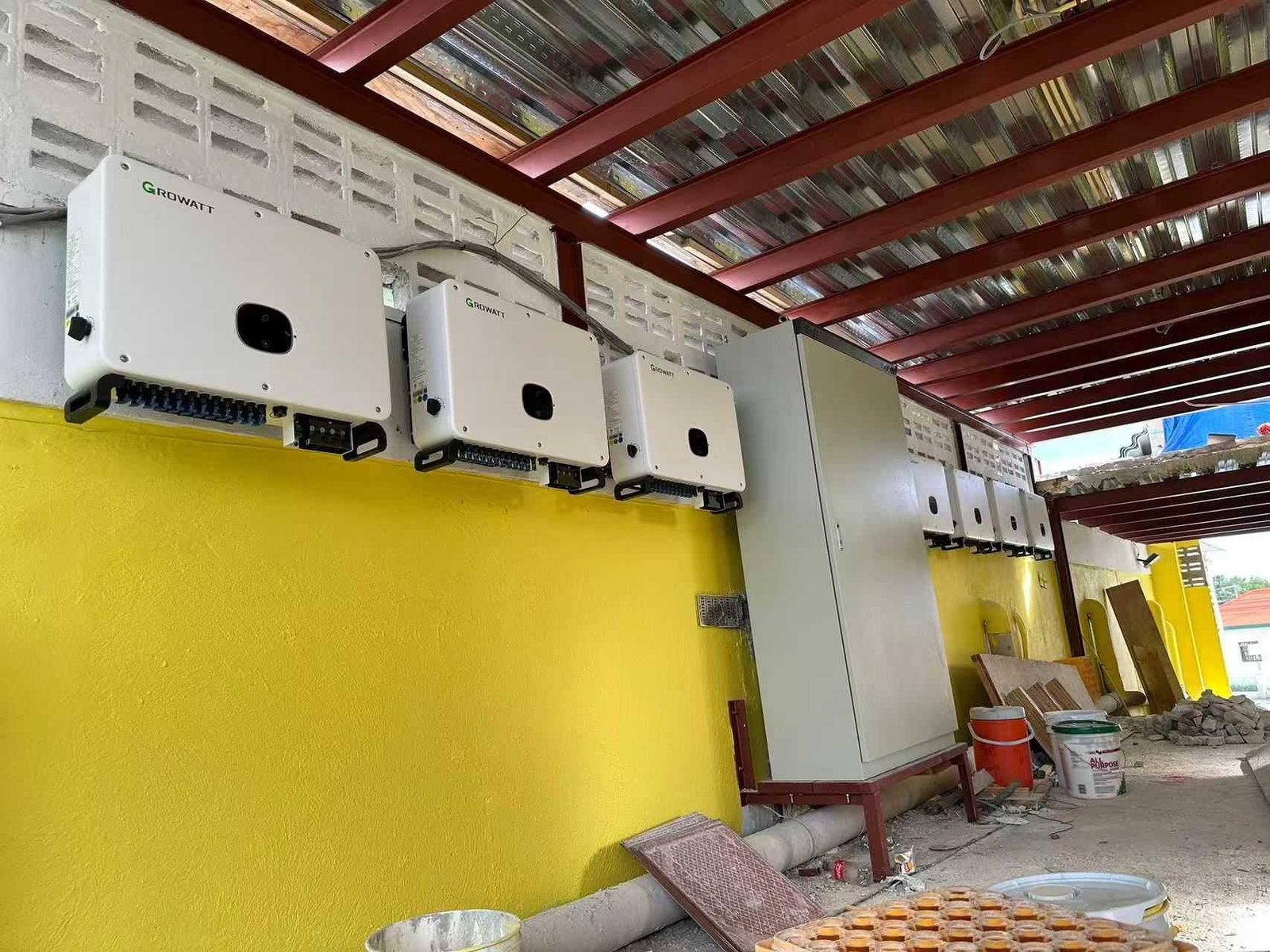
Mars Solar engineered a rooftop + carport solar power system with a containerized battery energy storage system. The BESS provides backup for all refrigeration loads and peak-shaves the store's demand charges. The containerized system arrived pre-tested and was installed in 8 days — minimizing business disruption.
| Solar PV Capacity | 250 kW (rooftop + carport arrays) |
|---|---|
| Battery Energy Storage | 500 kWh LFP, containerized |
| Inverters | Hybrid, hurricane-rated mounting |
| System Type | Grid-tied with backup + peak shaving |
| Cold-chain backup | Full refrigeration load, 6+ hours |
| Installation | 8 days, containerized plug-and-play |
The system cut monthly electricity costs by $8,000+ — a 58% reduction. In two years of operation, the store has recorded zero unplanned downtime: the BESS has carried refrigeration through every grid event, including a major storm outage. The EPC contractor reports diagnosing issues remotely through the IoT monitoring platform.
| Monthly savings | $8,000+ |
|---|---|
| Annual savings | $96,000+ |
| Payback period | 18 months |
| Energy cost reduction | 58% |
| Unplanned downtime in 2 years | Zero |
“Mars Solar delivered the full design package in 72 hours, and the containerized BESS arrived pre-tested. Installation took 8 days. Two years of operation, zero unplanned downtime.”
— Sean Louvel, EPC Contractor, Curaçao
Two different constraints sized the two halves of this system. The 250 kW array was sized against what the store consumes in daylight — refrigeration, lighting and HVAC across trading hours. The 500 kWh battery was sized against something else entirely: the length of outage the cold chain has to survive. That is why a pack this large sits behind a mid-size array, and why "size the battery from your night-time kWh" is the wrong rule for a supermarket.
500 kWh carrying the full refrigeration load for the six-hour design window implies a critical load of roughly 80 kW (500 kWh ÷ 6 h ≈ 83 kW). At that capacity a containerized enclosure was the right call: thermal management, fire separation and service access all move outside the sales building, and most commissioning happens in the factory. The system arrived pre-tested, which is what compressed the on-site programme to eight days.
About 1,250–1,500 m² of usable area. The arithmetic: 250 kW × 5–6 m² per kW using 550–600 W modules, with maintenance aisles and roof-edge setbacks included. Where the roof cannot supply that — as in Willemstad — the balance goes onto a carport or ground frame.
The design window is six hours at full refrigeration load, which implies a critical load near 83 kW (500 kWh ÷ 6 h). Adding ride-through is a capacity question, not a redesign.
Mounting is engineered to the site's design wind speed, with attachment spacing and fastener pull-out set by roof type, building height and exposure category. Ahead of a forecast storm the inverters are shut down and the battery is held near full charge so refrigeration continues through the outage.
The BESS covers the six-hour design window and the site has recorded zero unplanned downtime in two years. Whether you also keep a generator is a risk decision about multi-day events that exceed that window.
Mainly displaced grid energy at the $0.38/kWh commercial tariff against a bill that previously exceeded $14,000 a month, plus a demand-charge component from peak shaving. The published result is a 58% reduction, or $96,000+ a year.
What makes a solar system for supermarket loads different is the cold chain: refrigeration runs around the clock, so the array is sized against daytime cooling demand while the LFP battery carries refrigeration through outages. In Curaçao's island grid — where commercial tariffs reached $0.38/kWh and monthly bills exceeded $14,000 — a solar system for supermarket loads paid back in about 18 months. We engineer mounting to hurricane wind loads, and size storage from your overnight refrigeration draw rather than from a rule of thumb.
Free system design and ROI estimate within 24 hours — based on your actual electricity bills.