
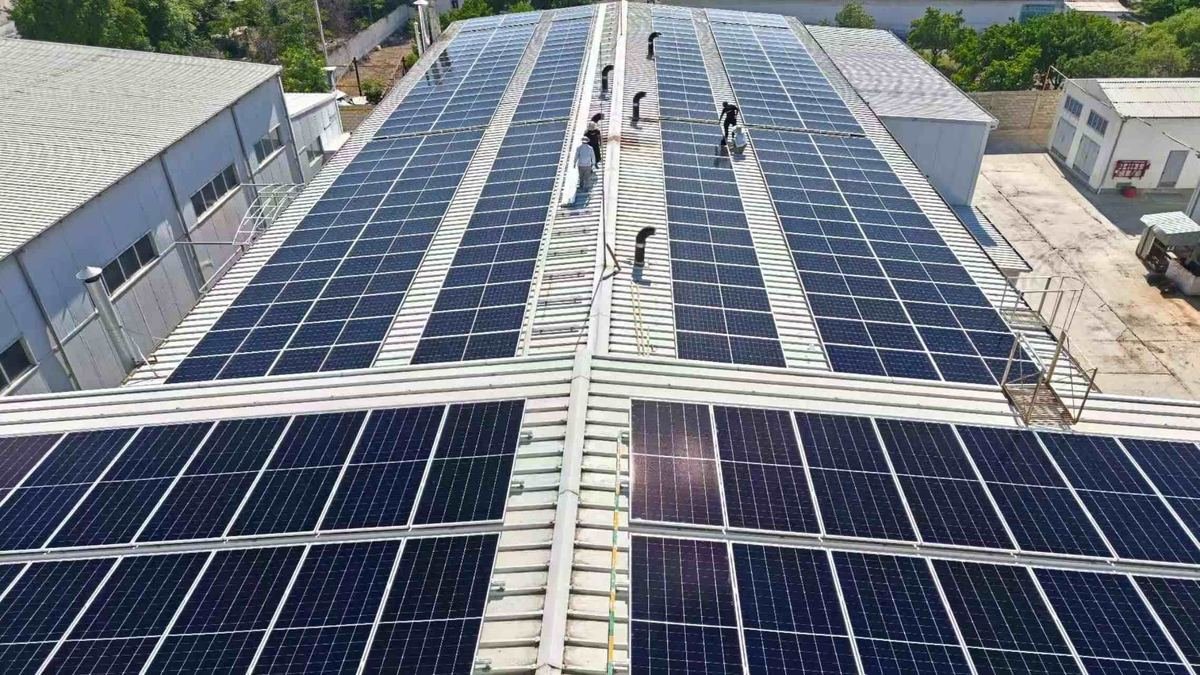
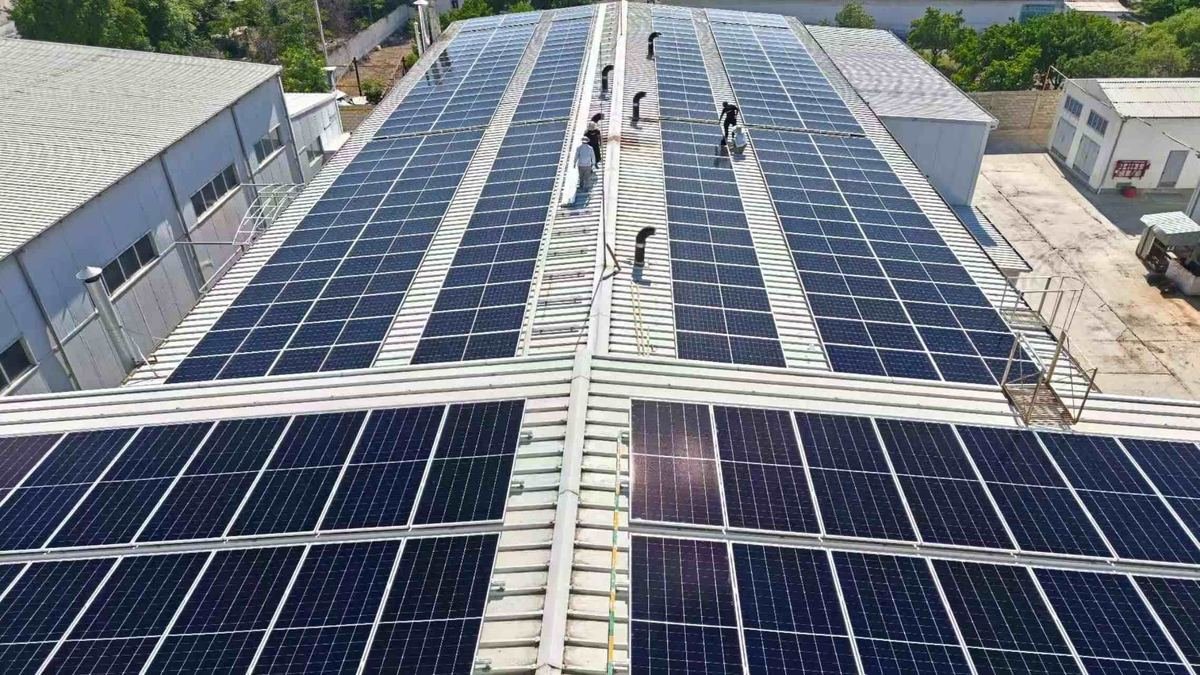
Ask anyone who has built across several African markets and Kenya usually comes out near the top for ease of making the numbers work: a high tariff, strong resource, a mature permitting framework and — unlike most of our markets — a functioning market for third-party ownership. The catch is administrative. The sequence of Kenya Revenue Authority import clearance, KEBS conformity certification and EPRA licensing trips up more projects than the engineering ever does.
The Numbers That Drive Commercial Solar Kenya Economics
| Input | Planning value | Basis |
|---|---|---|
| Commercial electricity tariff | $0.171 / kWh | GlobalPetrolPrices, December 2025 — re-run with your Kenya Power rate class |
| Specific yield (planning range) | 1,600 to 1,900 kWh / kWp / year | Kenyan planning range reflecting high irradiation at altitude — confirm per site; this is the widest yield band in our four target markets |
| Landed cost adder over CIF | +20% to +35% | Verified internal anchor: freight, duty, VAT, port handling, local installation |
| Daytime self-consumption | 75% to 90% | High for single-shift manufacturing, lower for hospitality |
| Storage share of system cost | 35% to 50% | Verified internal anchor |
| Module price (FOB China) | $0.28 to $0.48 / W | Verified internal anchor |
Note the yield band. Because it is wide — 1,600 to 1,900 kWh per kWp per year depending on altitude, haze and orientation — a Kenyan payback number that does not state its yield assumption is not worth reading. We use 1,750 as the midpoint below and show the effect of the upper bound.
Permits and Ownership: Three Separate Systems
Kenyan projects touch three regimes, and the order you sequence them in determines how smoothly things go.
- KEBS pre-export verification of conformity (PVoC). Regulated imports cannot ship without it. A Certificate of Conformity is raised against the consignment before loading, based on inspection and the underlying test reports. Get this started early — it is on the critical path before you sail, not after you arrive.
- EPRA — the Energy and Petroleum Regulatory Authority. EPRA is the sector regulator handling licensing and permitting around electrical installations and generation, including solar. The specific permit category depends on the size and nature of your installation and whether you intend to export. Engage early and through a licensed local contractor.
- Kenya Power interconnection. If you will export rather than self-consume everything, your net-metering arrangement with Kenya Power is its own process with its own metrology requirements. Confirm the current scheme before designing around export revenue.
On ownership, Kenya is the one market in our set where third-party structures are genuinely common. A power purchase agreement puts somebody else's capital on your roof: you buy the electricity at an agreed rate below your utility tariff, they own and maintain the asset. For a business that would rather deploy capital into stock or plant than into panels, that is often the deciding factor. The numbers change shape completely — your saving becomes the discount versus Kenya Power rather than a payback period — so read our Kenya solar PPA guide before you choose a route.
A Worked Payback: 100 kWp Plus 215 kWh
Step 1 — Capital cost. The verified CIF range for a 100 kWp array with 215 kWh of storage is $88,000 to $115,000. With the 20% to 35% landed adder:
- Low: $88,000 x 1.20 = $105,600 landed
- High: $115,000 x 1.35 = $155,250 landed
- Module sanity check: 100 kW = 100,000 W x $0.28 to $0.48/W = $28,000 to $48,000 of the total
Step 2 — Generation. At the yield midpoint of 1,750 kWh/kWp/year, 100 kWp produces 175,000 kWh a year. At 85% daytime self-consumption that is 148,750 kWh displaced at $0.171/kWh:
- 148,750 kWh x $0.171 = $25,436 saved per year
- At the upper yield bound of 1,900 kWh/kWp/year instead: 161,500 kWh x $0.171 = $27,617 per year
Step 3 — Payback, with and without storage. Stripping out storage at 35% to 50% of system cost gives the generation-led case:
| Configuration | CIF cost | Landed cost | Payback at $25,436 / year |
|---|---|---|---|
| Generation-led (array plus balance of system) | $44,000 to $74,750 | $52,800 to $100,900 | 2.1 to 4.0 years |
| Full hybrid (100 kWp plus 215 kWh) | $88,000 to $115,000 | $105,600 to $155,250 | 4.2 to 6.1 years |
A high-altitude site hitting the top of the yield band shortens both rows: at $27,617 a year the generation-led case lands at 1.9 to 3.7 years. That is about as good as self-financed commercial solar gets anywhere, which is why the Kenyan market absorbs both ownership models comfortably.
For a full regional price breakdown by size, see our solar system cost Kenya 2026 guide. The hardware behind the model above is the 100 kW commercial solar system.
Specifying for Kenyan Conditions
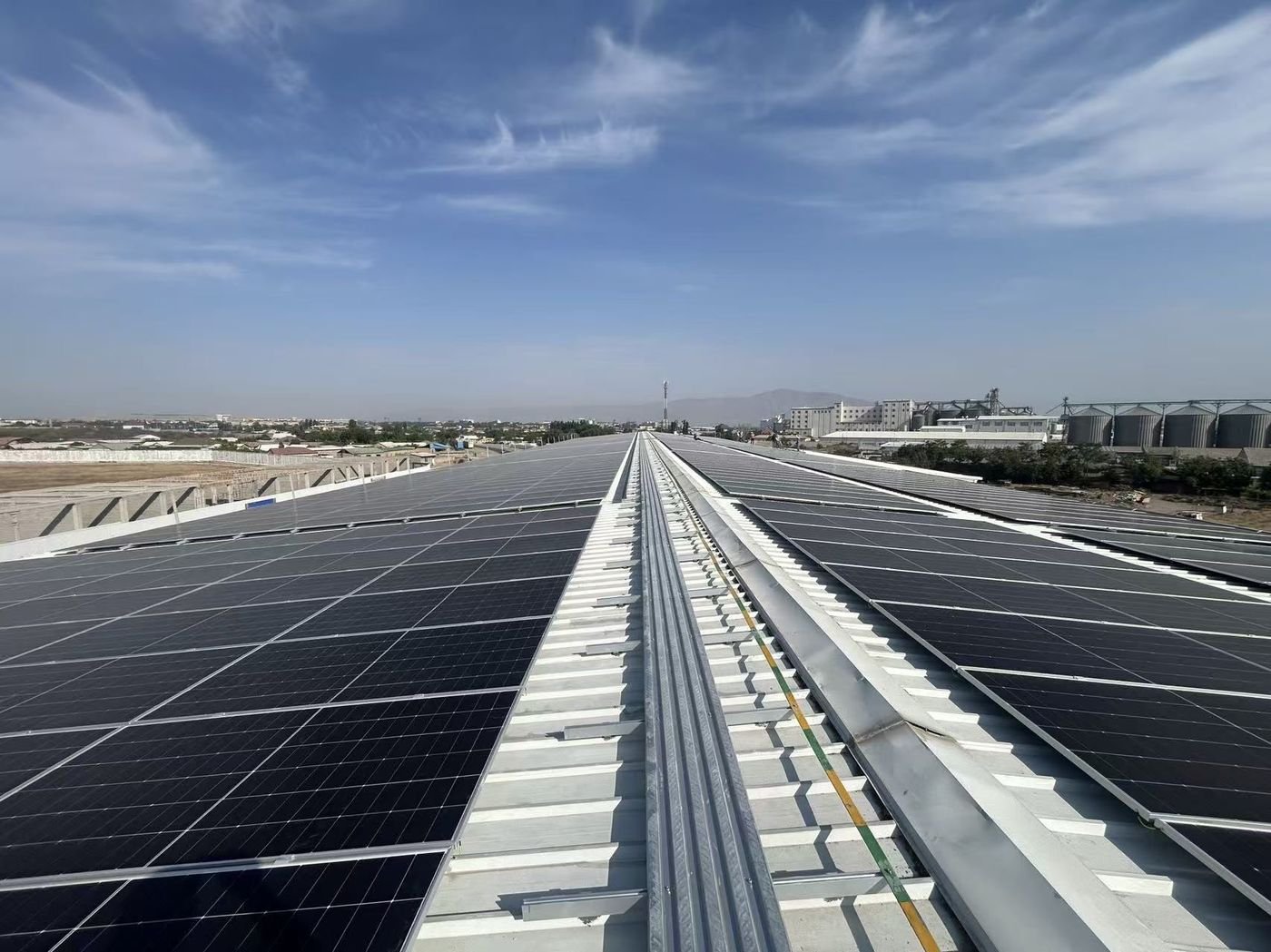
Kenya has two climate extremes in one supply chain. Inland and highland sites get high irradiation and high ultraviolet load — specify UV-stable cable management, certified backsheet materials and check the module's UV and PID test history. Coastal Mombasa operations get salt-laden air, so stainless hardware of the right grade and salt-mist-tested frames are non-negotiable. Add dust in the arid counties and you have three reasons to write a cleaning schedule into the O&M contract before commissioning.
At the top of the size range, the reference installation worth studying is our 1 MW factory solar-plus-storage project in South Africa — a large African industrial plant where peak-shaving tariffs, not just energy volume, drove the storage sizing. Kenyan factories on time-of-use structures face the same logic.