
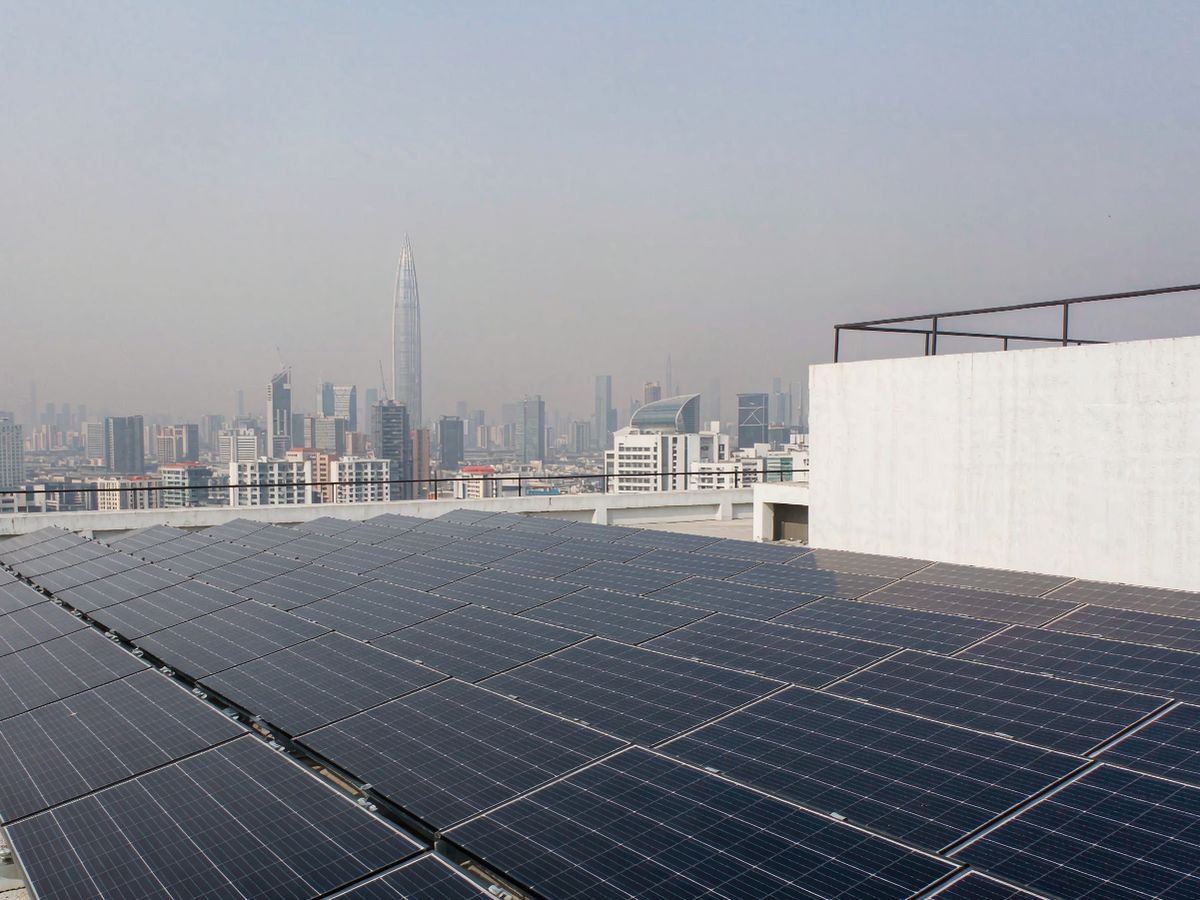
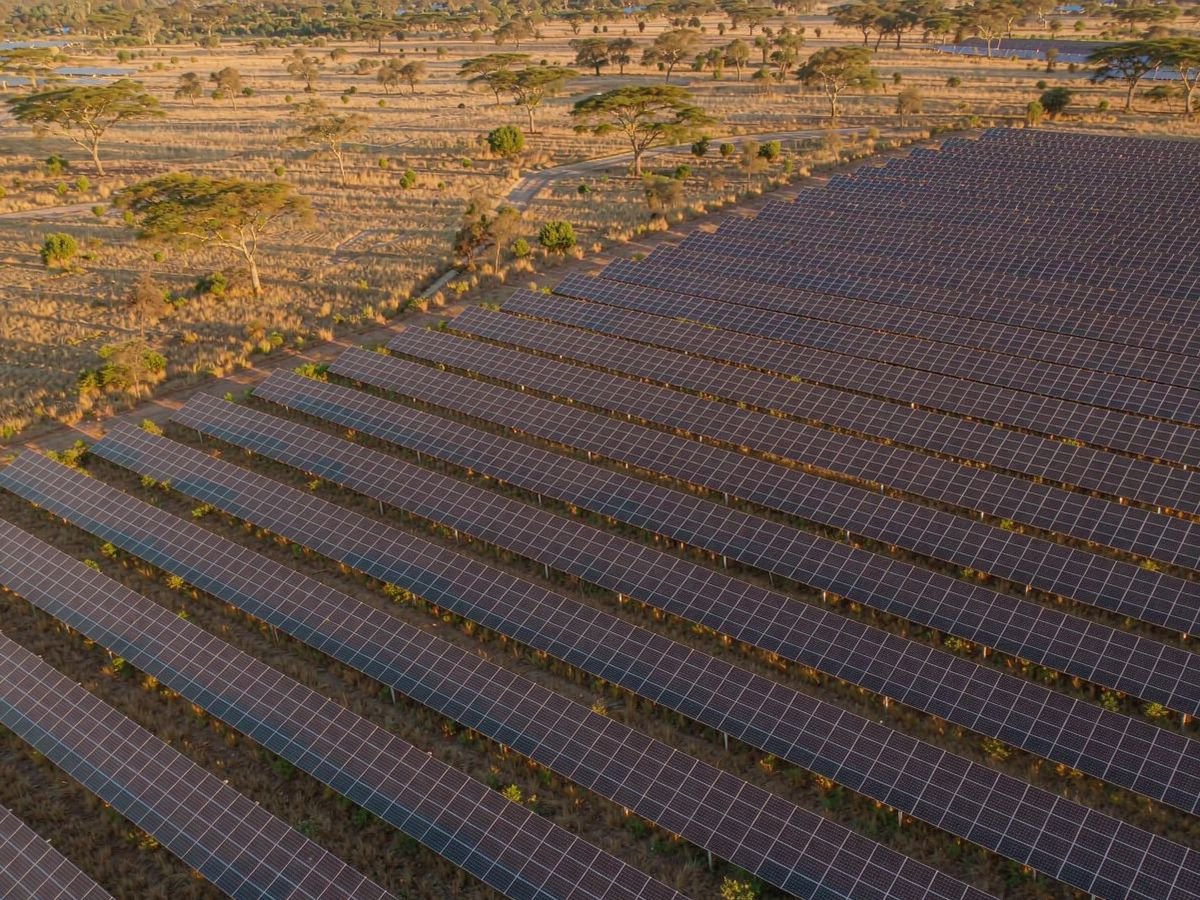
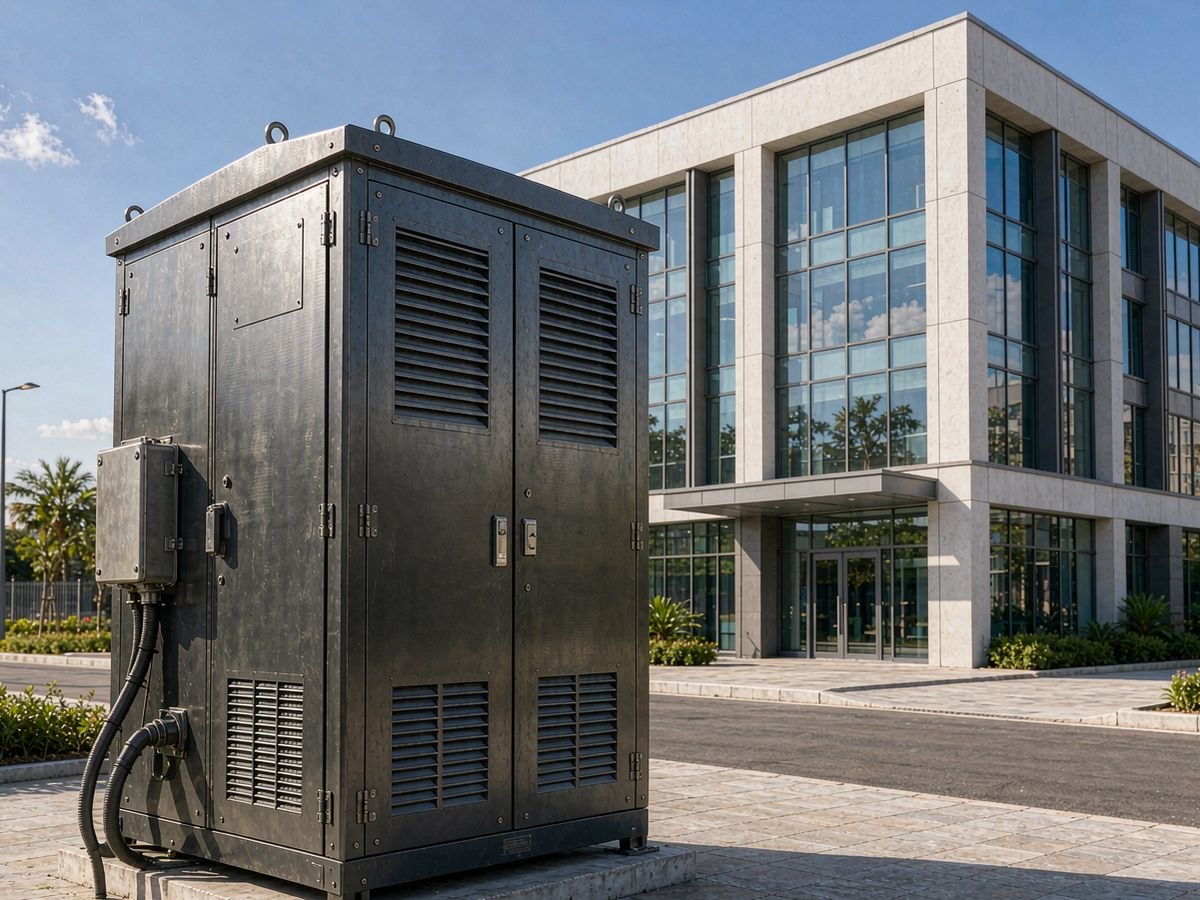
Kenyan businesses have long carried some of the highest effective power costs in the region — KSh 18–28 per kWh all-in for commercial users once fuel cost charges, forex adjustment, levies and 16% VAT stack on top of the base tariff. The Energy (Electricity Market, Bulk Supply and Open Access) Regulations of 2026, gazetted by EPRA, change the structure: qualifying consumers can now sign a 10–20 year power purchase agreement directly with a solar developer, and KPLC is no longer the mandatory counterparty in between.
What a Solar PPA Kenya Actually Is
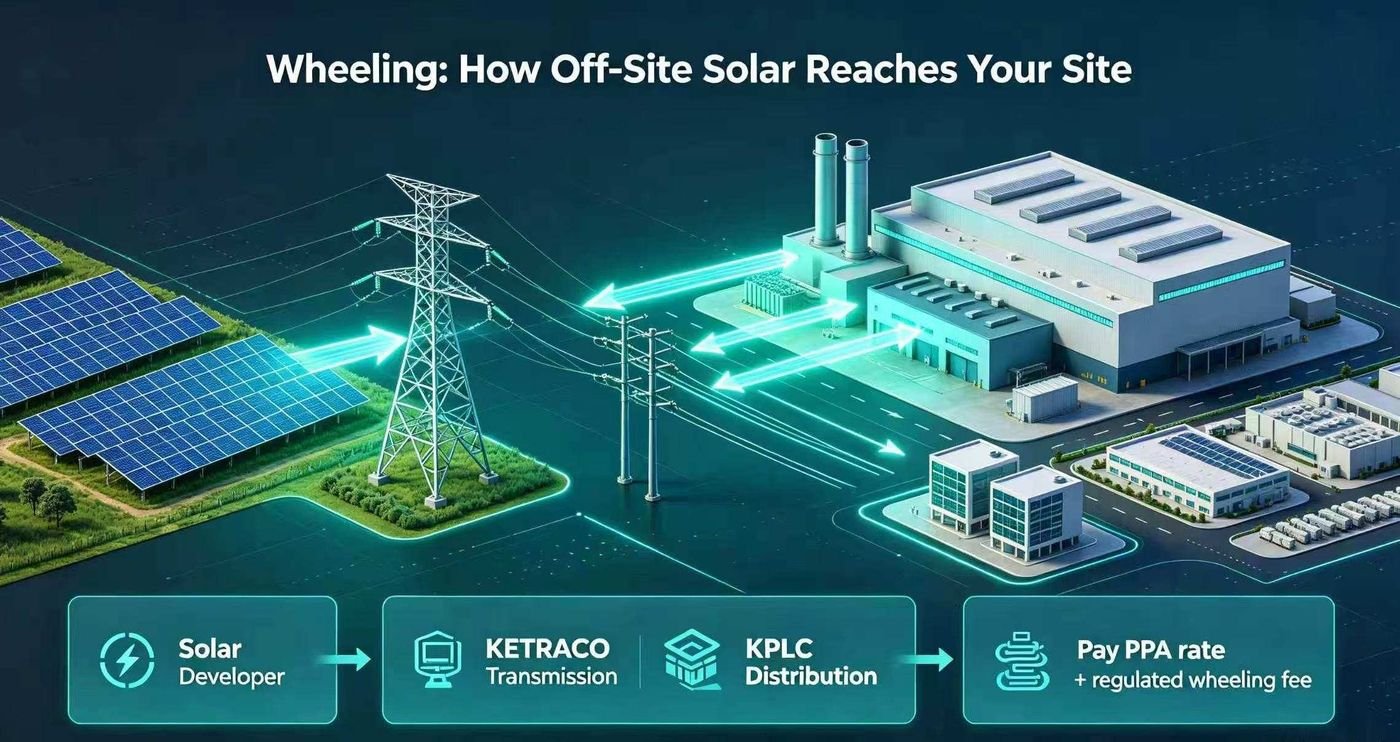
In a PPA, the developer builds, owns and operates the solar plant; you simply buy the electricity it produces at a fixed price per kWh. No upfront capital, no maintenance obligation — savings start the day the plant is commissioned. The 2026 framework delivers it two ways: on-site (captive), with the plant on your roof or land feeding you directly and no wheeling fee; and off-site (wheeling), where a solar farm elsewhere generates your power and KPLC/KETRACO transport it for a regulated access fee — the newly unlocked option, which scales well beyond 5 MW.
The Price Gap That Drives Everything
| Cost component (2026) | Typical value |
|---|---|
| KPLC C&I base tariff (CI1, 400V) | KSh 13.44/kWh |
| Fuel cost charge + forex adjustment | KSh 4–7/kWh, variable monthly |
| Levies (REP, ERC, WRMA) | ~KSh 0.50–0.55/kWh |
| Effective all-in grid rate | KSh 18–28/kWh |
| Solar LCOE over 25 years | KSh 8–14/kWh |
A 200 kW rooftop array on a Nairobi factory generates roughly 290 MWh a year and trims KSh 1.5–3.5 million from annual electricity costs. Over a ten-year horizon, the arithmetic for a typical SME: grid around KSh 4.3 million, diesel backup around KSh 7.9 million, solar around KSh 1.0–1.4 million including maintenance. A properly structured solar PPA Kenya businesses sign delivers those savings with zero upfront capital.
What the Regulations Changed, Precisely
- Direct PPAs — generators may sell straight to large consumers, no KPLC contract required.
- Open access — KPLC and KETRACO must grant non-discriminatory network access for a regulated wheeling fee.
- Bulk-supply threshold — consumers above it can contract a solar farm anywhere in the country.
- Currency flexibility — following the end of the PPA moratorium in late 2025, agreements can denominate in shillings, hard currency or a blend, cutting FX risk for locally-financed projects.
Tax Treatment Works in Your Favour
Bare solar cells and modules enter Kenya exempt from import duty and VAT (VAT Act 2013, s.15(n)), and proposed 2026 amendments would halve import VAT on broader green-energy equipment from 16% to 8%. One caution for battery-heavy projects: a separate proposal could shift batteries from zero-rated to exempt status, which would block input-VAT recovery — worth locking in battery quotes early.
Who Qualifies, and the Practical Path
Factories, industrial parks, data centres, cement plants and large commercial complexes above the bulk-supply threshold can contract directly; smaller sites can still build captive on-site solar below 1 MW without an EPRA licence. The process runs: feasibility (load audit, roof/land assessment) → PPA negotiation (fixed KSh/kWh with escalation cap) → permits (EPRA, NEMA, KPLC interconnection — developer-handled) → construction → operation, paying only for solar kWh consumed. That is the core appeal of a solar PPA Kenya importers and end-users now pursue.
Mars Solar supplies turnkey solar-plus-storage systems for East African commercial projects from our Foshan factory — 3,000+ projects across 135+ countries, hybrid systems engineered to displace diesel and stabilize supply. Developers and end-users alike can request a feasibility-grade quotation, with system design returned within 24 hours.