
Quick answer: battery storage cost per kWh
Battery storage cost per kWh in 2026 depends entirely on which of three numbers you mean. In 2026, LFP cells trade globally at roughly $84 per kWh, with Chinese tier-1 suppliers transacting in bulk around $75–78/kWh. Finished C&I equipment — cells plus PCS, BMS, EMS, thermal management and enclosure — is quoted at about $150–280 per kWh for 2-hour cabinets and $120–220 per kWh for 4-hour containerised systems. Turnkey installed C&I projects commonly run $250–400 per kWh. The spread between those three numbers is the whole subject of this guide.
What battery storage cost per kWh actually measures
Cell cost is the price of the lithium iron phosphate cells alone, before anything is built around them. It is the most volatile number and the one that makes headlines.
Equipment cost is the finished cabinet or container leaving the factory: cells, racks, power conversion system, battery and energy management, thermal management, fire detection and suppression, and the enclosure.
Installed cost is what appears in a capital budget: equipment plus freight and duties, civil works, cabling and switchgear, labour, commissioning, permits and interconnection.
When someone says storage fell 40%, they are nearly always describing the first. When a project manager says the number did not move, they are describing the third.
Battery storage cost per kWh: 2026 benchmarks by application
| Application | Typical size | Equipment (FOB) | Turnkey installed | Target payback |
|---|---|---|---|---|
| Residential storage | 5–20 kWh | Small volumes, higher per kWh | $380–550 per kWh | 6–8 years |
| C&I storage | 100–500 kWh | $150–280 per kWh (2-hour) | $250–400 per kWh | 3–5 years |
| Large industrial | 500 kWh–2 MWh | $120–220 per kWh (4-hour) | $210–300 per kWh | 2–4 years |
| Utility-scale | Above 5 MWh | Lowest per kWh | $150–240 per kWh | 4–6 years |
Benchmarks compiled from BloombergNEF, NREL and published 2026 industry surveys (accessed October 2026). Ranges are indicative: they move with volume, certification package, duration and whether PCS is integrated into the enclosure. For a public, non-commercial counterweight to vendor surveys, IRENA's own assessment of storage in West African mini-grids — Burkina Faso, Mali, Nigeria and Senegal — is worth reading alongside them: IRENA: Unlocking battery storage potential for sustainable mini-grid electrification in West Africa.
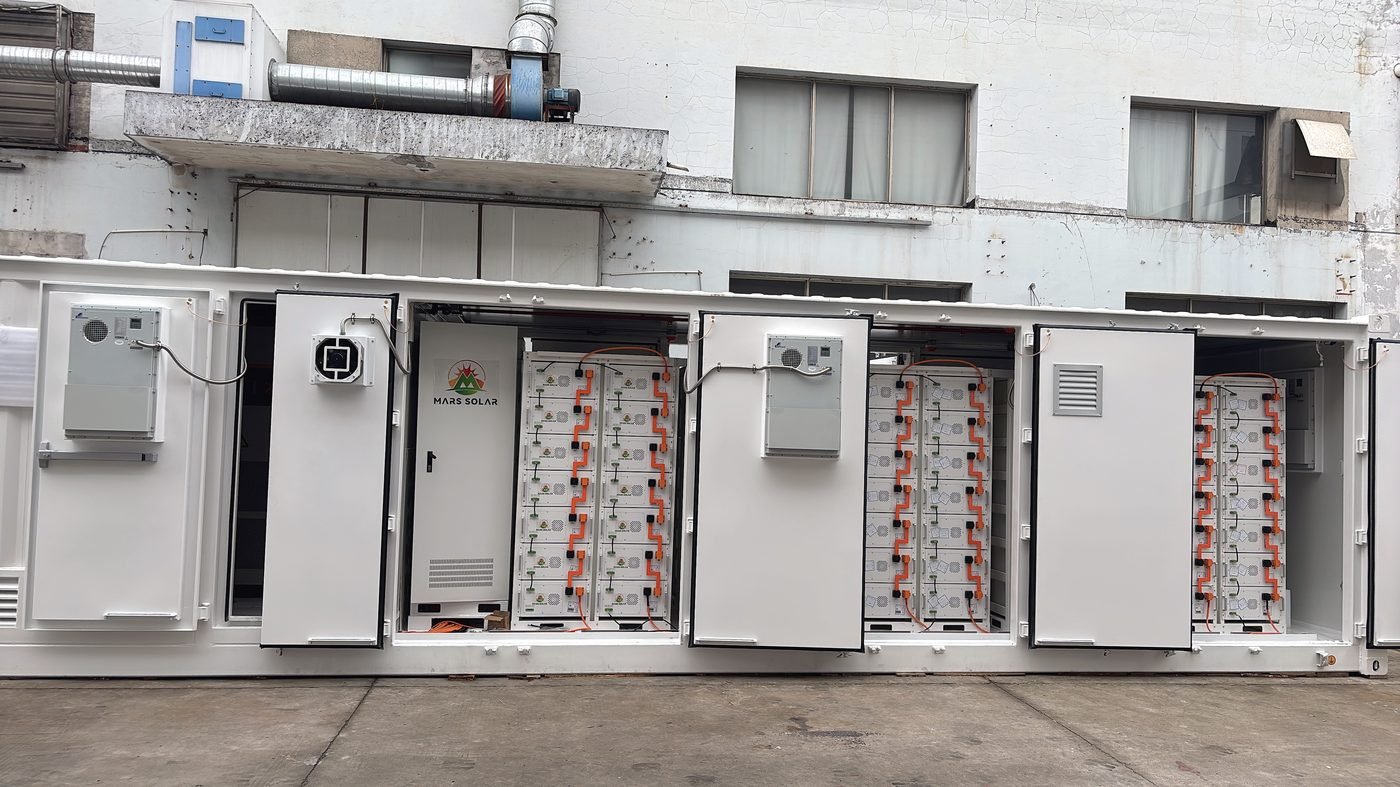
Battery storage cost per kWh: the two curves that move in opposite directions
This is the part most price articles miss. Equipment prices and installed prices are not falling together.
Pushing equipment prices down: continued LFP overcapacity, with tier-2 and tier-3 producers competing hard; 300+ Ah cells and denser racks becoming standard; falling PCS costs as silicon carbide devices mature; and intense competition among Chinese, Korean and European integrators in the C&I segment, where margins are thinner than at utility scale.
Holding landed prices up: transformers and switchgear, where lead times remain long and prices elevated; interconnection studies and permitting, which are rising in cost in most markets; electrical labour inflation; tariffs, anti-dumping duties and local-content rules; tightening fire and insurance codes that expand suppression, separation and documentation requirements; and buyer demands for longer warranties, grid-forming capability and higher IP ratings.
The practical consequence for an importer is that waiting for lower cell prices may save less than the bill savings you forgo while waiting — and in markets where soft costs dominate, it may save nothing at all.
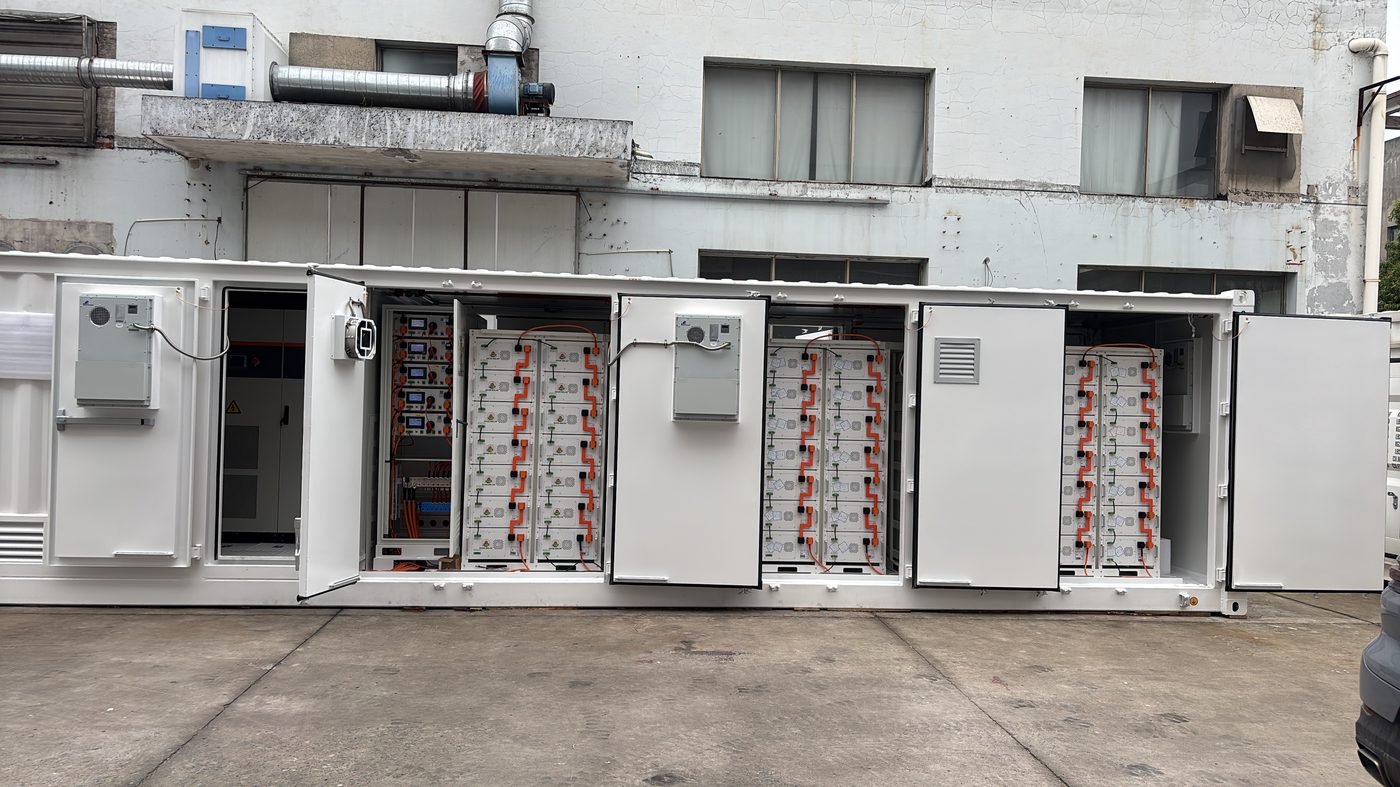
What battery storage cost per kWh means to land in Lagos, Manila or Panama
Factory-gate figures are not the number that reaches your site. Mars Solar publishes its LFP storage rate as $140–185 per kWh CIF to Lagos, against a factory-direct FOB range of $110–220 per kWh. The conversion is straightforward and worth checking on every quote you receive.
For a 215 kWh battery block inside a 100 kW containerised system: 215 kWh × $140–185/kWh gives $30,100–39,775 of the landed total. That matches the position stated on our system page, where a complete 100 kW + 215 kWh container is quoted CIF $88,000–115,000 — the battery block carries roughly a third of it, with the rest in modules, inverter, mounting, enclosure, freight and clearing.
At the larger end, a 500 kW array paired with 1 MWh of storage lands at $390,000–480,000 CIF. The per-kWh figure improves with scale, but never proportionally: the PCS, civil works and interconnection do not halve when the battery doubles.
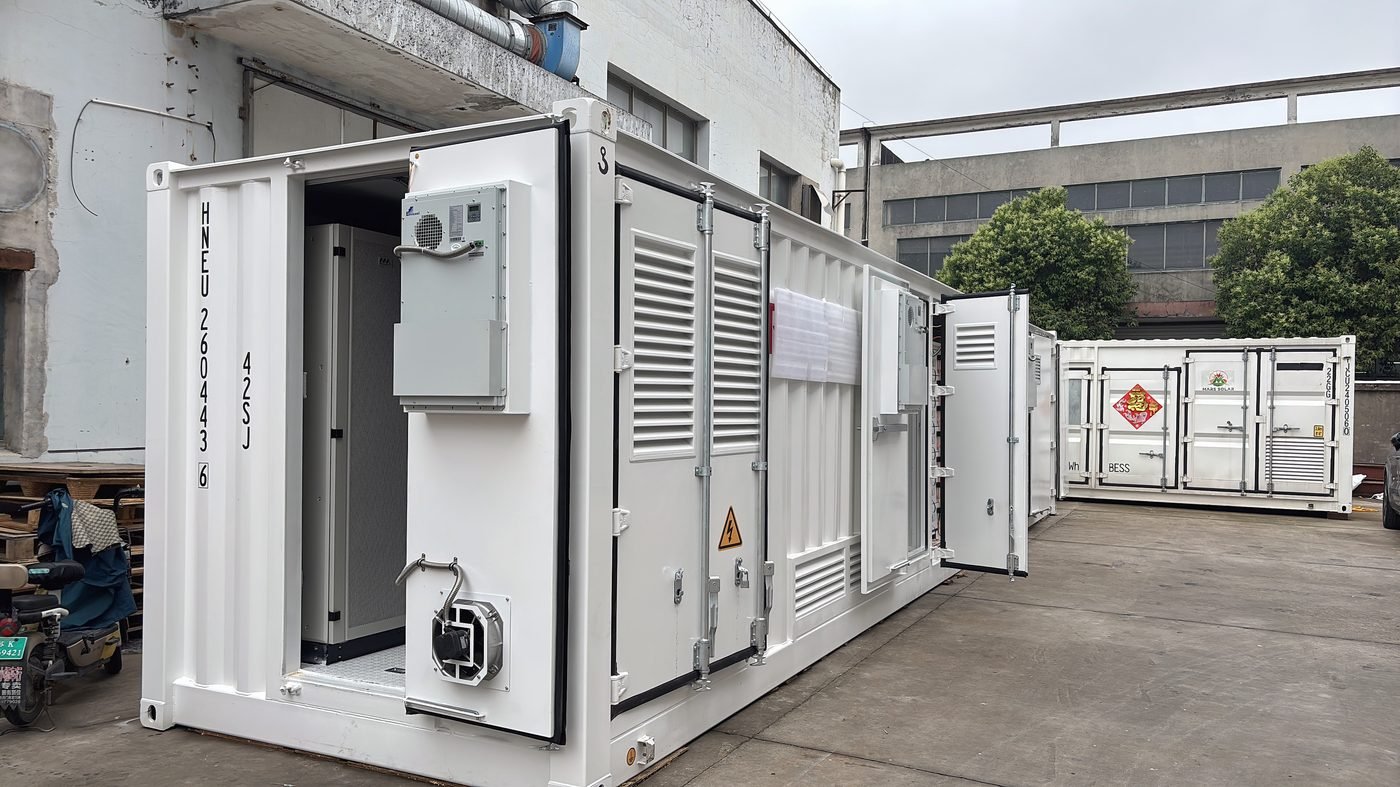
What sits inside the 20–35% landed adder
The FOB figure is the easiest number to compare between suppliers and the least useful one. Landing a container typically adds 20–35% over FOB to West African and Southeast Asian ports. That adder is not one thing — it is a list of eight, and the list splits cleanly in half:
| Cost block | What it covers | Scales with battery size? |
|---|---|---|
| Ocean freight and marine insurance | Container slots, bunker and risk surcharges | Yes |
| Port, terminal and clearing | Handling, documentation, dwell time | Partly |
| Import duty and VAT | Tariff line, valuation, any exemption you qualify for | Yes |
| Inland transport and cranage | Port-to-site haulage, crane, rigging | Partly |
| Installation labour | Electricians, mechanical fitters, supervision | No |
| Civil works and fire separation | Foundations, slab, firewall, drainage | No |
| Grid study and protection | Interconnection study, relays, metering | No |
| Commissioning | Testing, protection settings, performance verification | No |
The first four move with the consignment; the last four move with your site, your utility and your local wage market. That is the mechanical reason battery storage cost per kWh flattens as the system grows: doubling the battery doubles the cells and the racks, and leaves the PCS, the slab, the study and the commissioning broadly unchanged.
One risk in that list deserves its own line. Duty and VAT are the only block that can jump by policy between quotation and arrival. On an FOB or CIF basis that risk normally sits with the buyer, and it is the single line item most likely to move after signature — ask who carries it before you compare two quotations.
Should you wait for battery storage cost to fall further?
Three questions settle it better than any price forecast:
- How much of your landed cost is soft cost? If duties, labour, civil works and interconnection are more than half the budget, waiting for cheaper cells moves a minority of the total.
- What do you forgo each month you wait? In a solar-plus-storage retrofit, a 215 kWh block that captures generation you would otherwise export, cycled on about 300 days a year, is 215 × 0.80 × 300 ≈ 51,600 kWh. Against a $0.156/kWh commercial tariff that is roughly $8,000 of deferred purchases a year. In Nigeria the equivalent figure is diesel not burned, which is why the same hardware pays back faster there.
- Is the grid queue your critical path? Where interconnection studies take months, the study is the schedule constraint, not the cells — and waiting for a cheaper battery buys nothing.
Equipment prices are likely to keep declining modestly. Installed prices move far more slowly and can be flat where soft costs dominate. Weigh the expected saving against the second number, not the first.
Chemistry choice: LFP, NMC and sodium-ion
| Chemistry | Cost position | Cycle life at 80% DoD | Where it fits |
|---|---|---|---|
| LFP | The default; roughly 20–30% less per kWh than NMC | 4,000–6,000 cycles commonly specified | Stationary commercial storage, almost everywhere |
| NMC | Higher cost per kWh | 2,000–4,000 cycles | Only where floor space is extremely tight |
| Sodium-ion | Cell-level figures around $80–120/kWh reported; claims of 20–30% lower upfront CAPEX | Still proving out in the field | Early commercial availability; not yet a like-for-like substitute in most markets |
Mars Solar specifies LFP with a warranty of 10 years or 6,000 cycles at 80% depth of discharge, whichever comes first. Check the same two numbers on any competing quote — cycle life at a stated DoD, and the term, because they are not interchangeable.
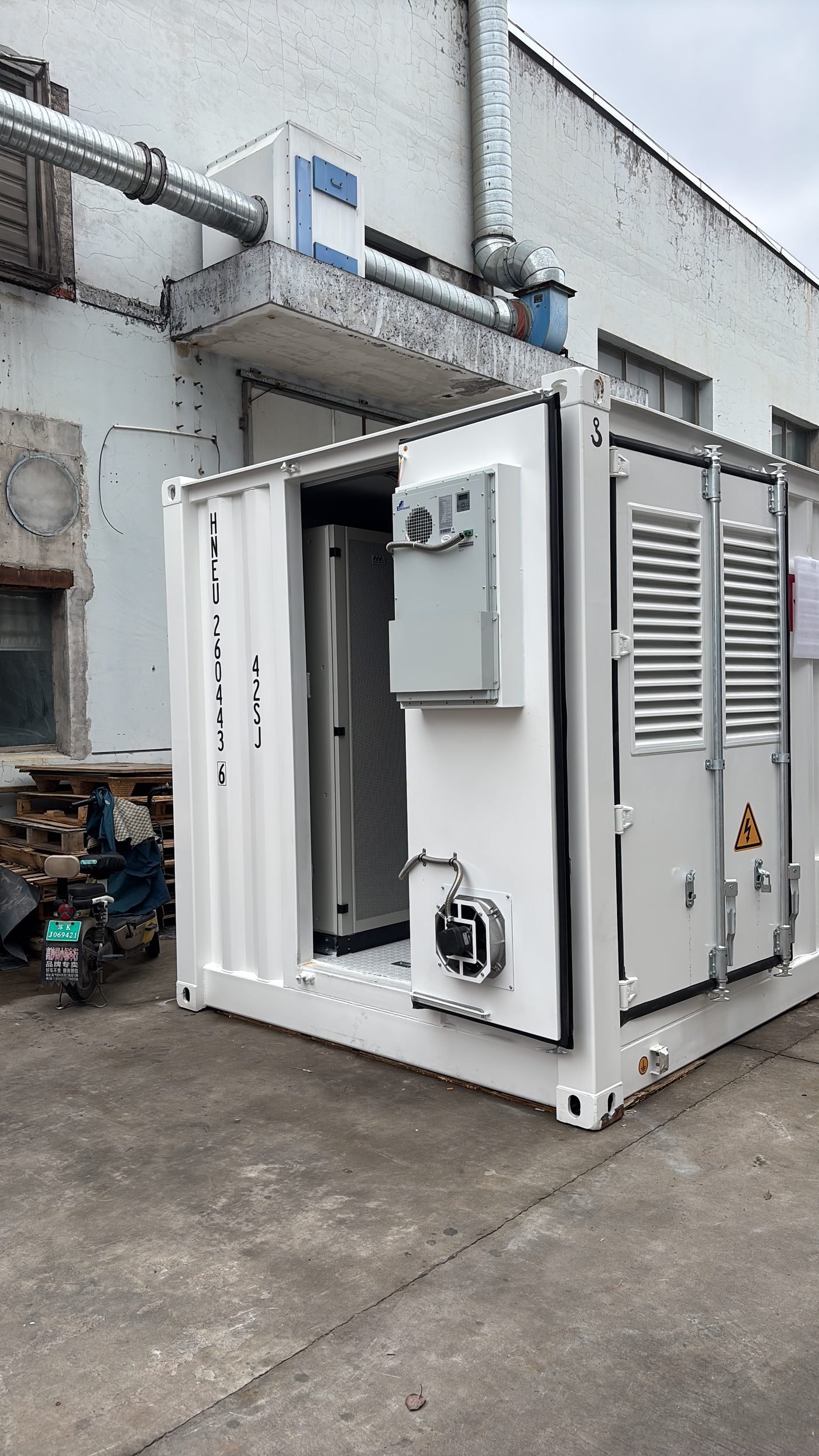
Cell size and cooling: where 2026 hardware differs
Larger cells are now the norm. 300+ Ah and 314 Ah cells reduce rack count, footprint and the cost of enclosures and land preparation, which is a real saving rather than a specification-sheet one.
Cooling follows the format. On our systems, air cooling is standard on cabinet systems up to 261 kWh, and liquid cooling is standard on containerised systems from 500 kWh, where cell temperature spread is held within 2°C. If a supplier offers liquid cooling on a small cabinet, ask what it adds to the price and what it actually buys you.
The payback arithmetic behind battery storage cost per kWh
Storage economics are best tested as a cost of delivered energy. The lifetime throughput of a battery is capacity × usable depth of discharge × cycle life.
For a 215 kWh LFP block at 80% DoD over 6,000 cycles: 215 × 0.80 × 6,000 = 1,032,000 kWh of lifetime throughput. Against the $30,100–39,775 battery cost, that is $0.029–0.039 per kWh of stored energy. Correcting for round-trip efficiency of about 90% gives $0.032–0.043 per kWh delivered, before charging energy and maintenance.
Compare that with diesel generation, which typically runs at a several-multiple of that figure in fuel alone once generator efficiency and maintenance are counted — which is why storage displacing diesel in Nigeria clears a payback far faster than storage shaving a grid bill. We work the Nigerian case, including duty and clearing treatment, in our BESS Nigeria cost and import guide. In the Philippines, where the commercial tariff is about $0.156/kWh, the same battery saves roughly $0.11–0.12 per kWh shifted from peak to off-peak, and the case leans on backup value as much as on tariff arbitrage — the market figures behind it are set out in our Philippines solar system price guide.
Tariff figures: GlobalPetrolPrices, December 2025. Efficiency, DoD and cycle figures: manufacturer specification. Replace the throughput figures with the values from your own warranty document before committing capital.
What a battery storage cost quotation must state
Storage is sized from the load, not bought by the kilowatt-hour. Work through our commercial solar sizing guide first, then hold the supplier to these seven items in the quotation.
- Capacity basis. Nominal kWh and usable kWh at the stated DoD. A 100 kWh battery at 80% DoD delivers 80 kWh, not 100.
- Cycle life and term, together. 6,000 cycles at 80% DoD or 10 years, whichever comes first.
- Warranty scope. Whether labour and travel are covered, and whether capacity degradation below the curve is covered or only outright failure.
- C-rate and surge behaviour. Continuous and peak discharge power, not just energy capacity.
- Round-trip efficiency. Measured AC-to-AC, not cell-level.
- Enclosure and cooling. IP rating, operating temperature range, and whether cooling is active.
- What is excluded. Transformer, switchgear, civil works, permits and interconnection — the line items that most often move after signature.
FAQ: battery storage cost per kWh
What is a good battery storage cost per kWh for commercial projects in 2026?
Why is my quote per kWh much higher than the cell price I read about?
Should I wait for prices to fall further?
What is the battery storage cost to land a 100 kWh commercial battery?
Is LFP or sodium-ion cheaper?
How do I convert an FOB price to CIF?
What is the battery storage cost per kWh actually delivered?
Does battery storage cost per kWh always fall as the system grows?
Is liquid cooling worth paying for on a small cabinet?
Where can I see full system prices, not just battery storage cost per kWh?
Get a battery storage cost figure for your project
Send your load profile, your daily outage exposure and your port, and we will return a configuration with a landed battery storage cost per kWh, a throughput calculation and a payback range — itemised, so you can see which of the eight blocks above each number belongs to.