
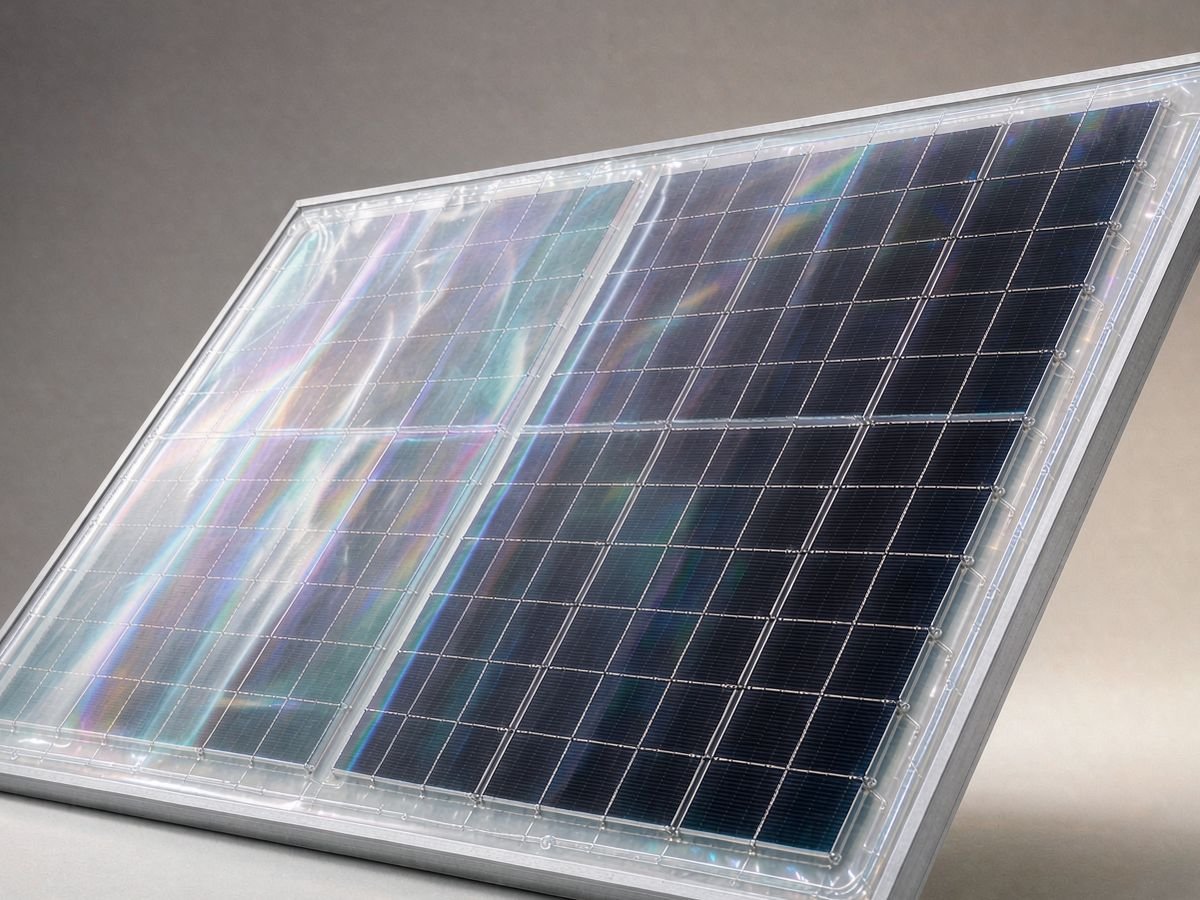
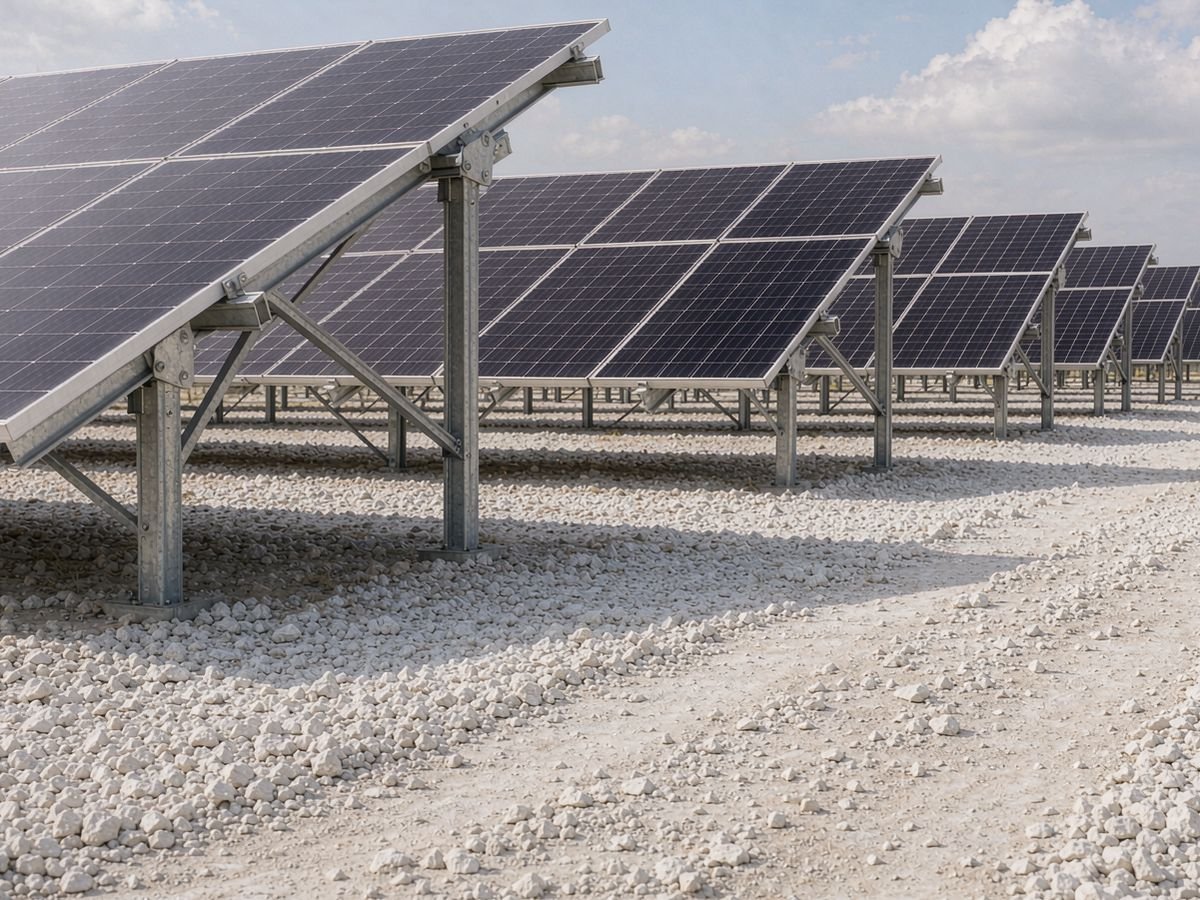
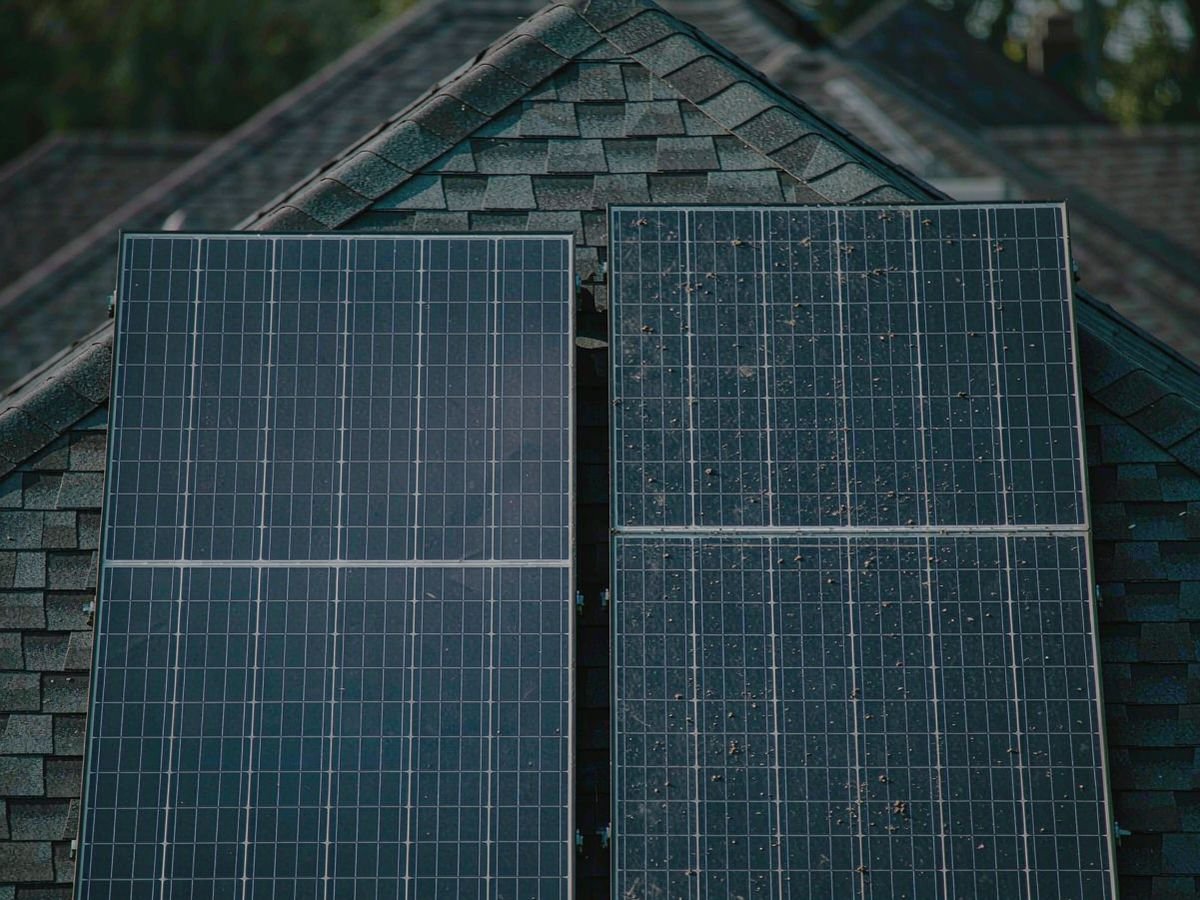
From the front, bifacial and monofacial panels are near twins. The difference is the back: a monofacial module carries an opaque backsheet, while a bifacial module lets light reach rear-side cells through a transparent backsheet or glass-glass laminate. Whether that second face earns its 15–25% price premium depends almost entirely on what lies beneath the array.
Bifacial vs Monofacial Solar Panels: 2026 Specification Snapshot
| Spec | Monofacial PERC | Bifacial N-type TOPCon |
|---|---|---|
| Module efficiency | 19–22% | 22–26% |
| Power range | 400–600W | 400–700W+ |
| Indicative FOB price | $0.10–0.14/W | $0.13–0.18/W |
| Temperature coefficient | −0.36%/°C | −0.29%/°C |
| Warranties | 12–15 yr / 25 yr performance | 15–25 yr / 30 yr performance |
| Weight (60-cell class) | ~23 kg | ~26–32 kg |
The Physics of the Bifacial Gain
Bifacial modules capture albedo — light bouncing off the ground toward the rear face. The gain scales with surface reflectivity: fresh snow returns 70–90% of incident light, white concrete 70–80%, sand 40–50%, grass 20–25%, dark soil and dark roofing barely 10–15%. Mounting height matters too: a meter or more of clearance lets rear cells see the ground; panels flush against a roof see almost nothing. Diffuse light on cloudy days still reaches the rear face, but the gain shrinks to 5–10%. Understanding this physics is the core of choosing bifacial vs monofacial solar panels.
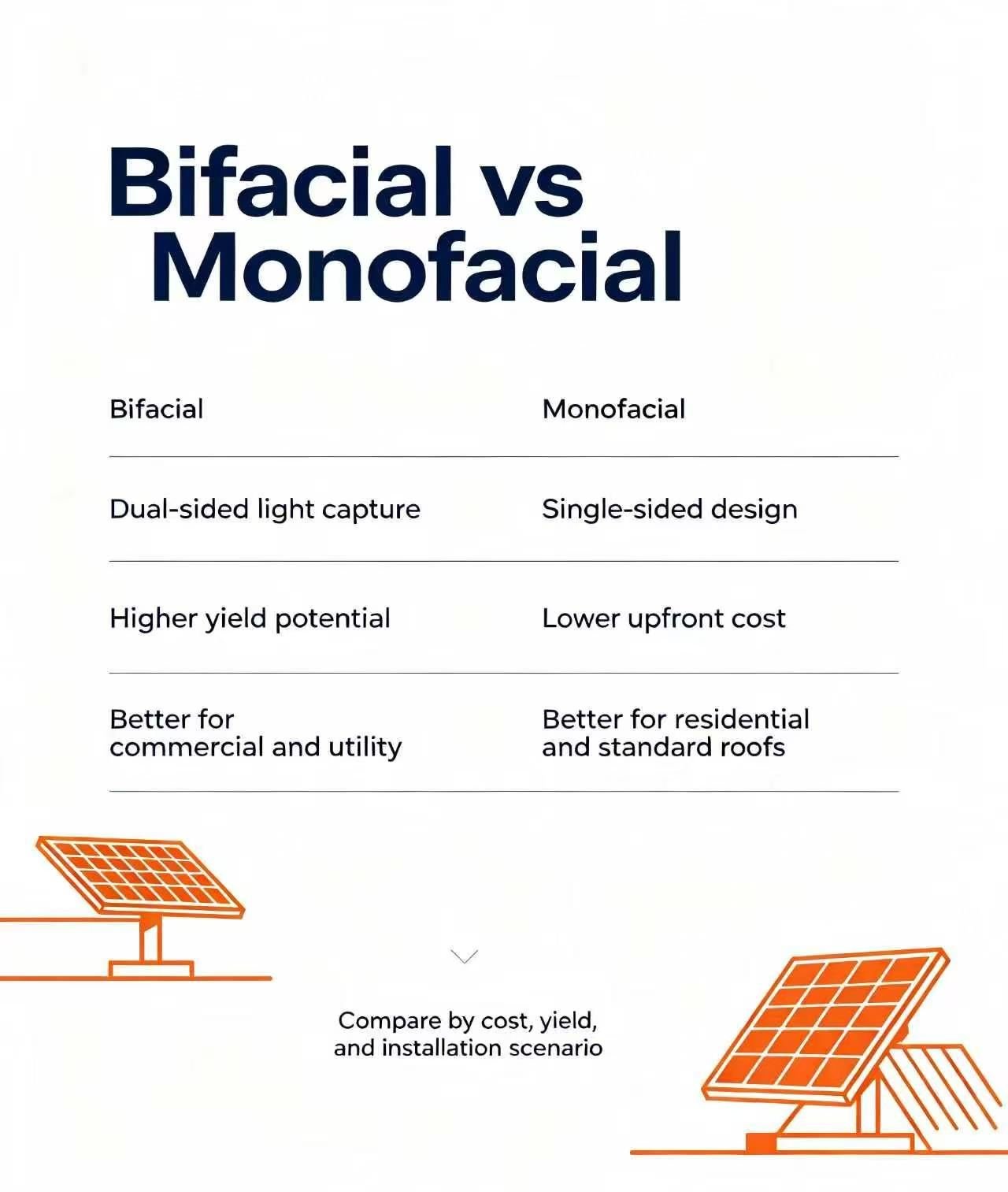
Where Bifacial Wins
Desert and sandy ground-mounts are the textbook case — sand albedo plus elevation delivers 15–25% more annual energy, and the premium typically pays back in two to three years at high irradiance. White or concrete surfaces (carports, bright rooftops, gravel beds) push gains to 15–30%. Hot climates get a second, quieter benefit: the better temperature coefficient means 2–3% less output loss per degree above 25°C — material in Nigeria, Ghana or the Gulf. And space-constrained sites sometimes justify bifacial purely for watts per square meter.
Where Monofacial Remains the Smart Money
On sloped residential rooftops the rear face sees nothing and the premium is pure loss. On shaded or cluttered commercial roofs with low albedo, gains of 3–8% never recover the added cost. And on tight budgets, $2,000–4,000 extra per 100 kW for a marginal yield is better spent on battery capacity or structure. For most rooftop work in 2026, high-efficiency monofacial PERC at 550–600W remains the best value per dollar.
Five Worked Scenarios
| Project | Surface / albedo | Bifacial premium | Gain | Verdict |
|---|---|---|---|---|
| 100kW flat roof, Lagos | Concrete, ~25% | +$2,500 | +8% | Bifacial — ~2.6 yr payback |
| 10kW home, Manila | Tiled slope, ~10% | +$380 | +3% | Monofacial |
| 1MW ground-mount, Accra | Light gravel, ~40% | +$18,000 | +18% | Bifacial — ~1 yr payback |
| 50kW hotel roof, Nairobi | Metal sheet, ~15% | +$1,300 | +5% | Monofacial 580W |
| 200kW off-grid mine, DRC | Red soil, ~12% | — | — | Bifacial 700W for land efficiency |
A Simple Decision Rule
Deciding between bifacial vs monofacial solar panels should follow your albedo and budget, not the sales pitch. Ground-mount on sand, gravel, concrete or snow: bifacial. Rooftop with limited clearance: monofacial. Not sure: measure or estimate your albedo, then let the payback arithmetic decide — it is a two-line calculation once you know the premium and the local irradiance. Send us the site details (location, surface type, mounting height, target kW) and our engineers will return a panel-type recommendation with FOB/CIF pricing within 24 hours — we supply both technologies, so the recommendation follows your ROI, not our inventory. See our Curaçao ground-mounted project for a bifacial deployment on bright coral ground.