
Procurement teams evaluating Chinese solar suppliers circle the same three questions: what is the minimum I can order, when will it actually ship, and how do I pay without getting burned. Vague answers to any of the three are themselves data. Here is what a transparent supplier's answers look like.
Solar MOQ Lead Time and Payment Terms: Minimum Orders
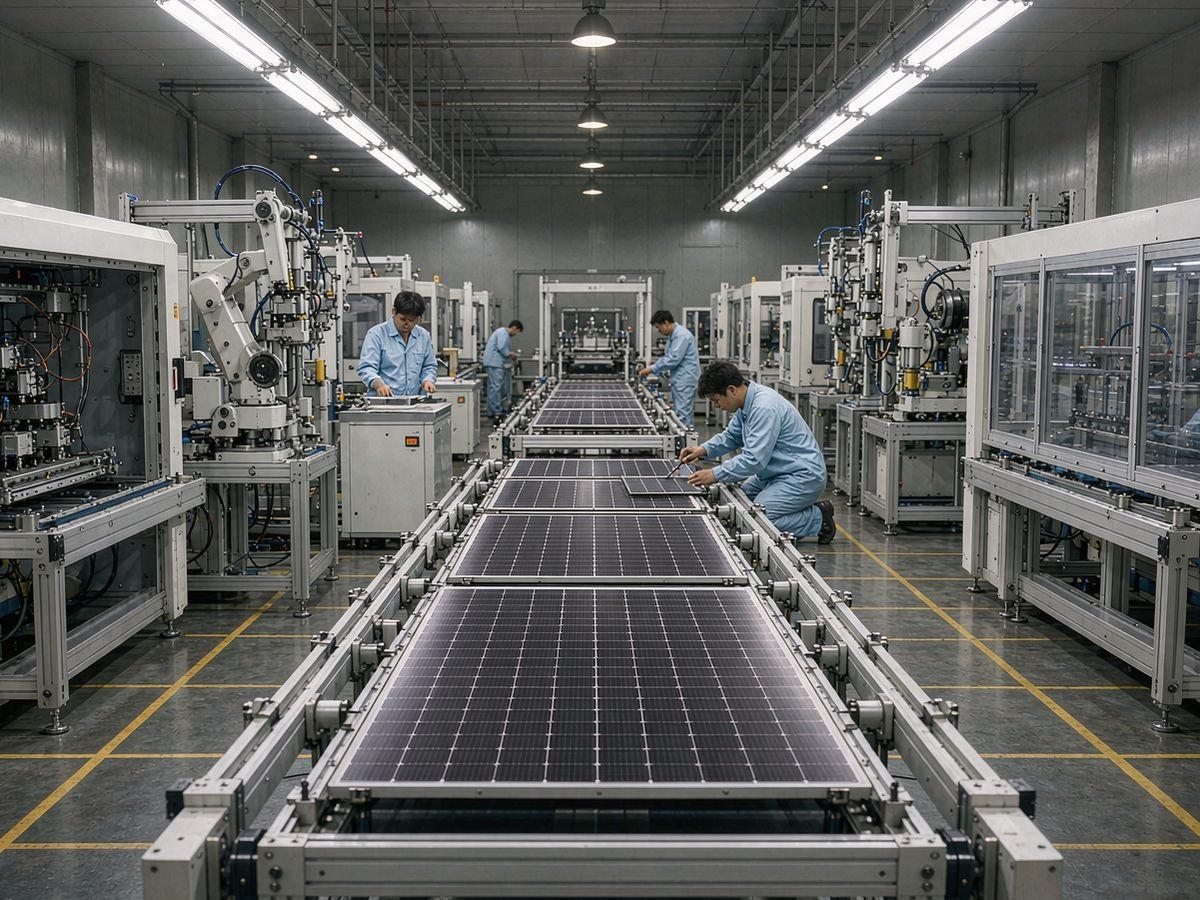
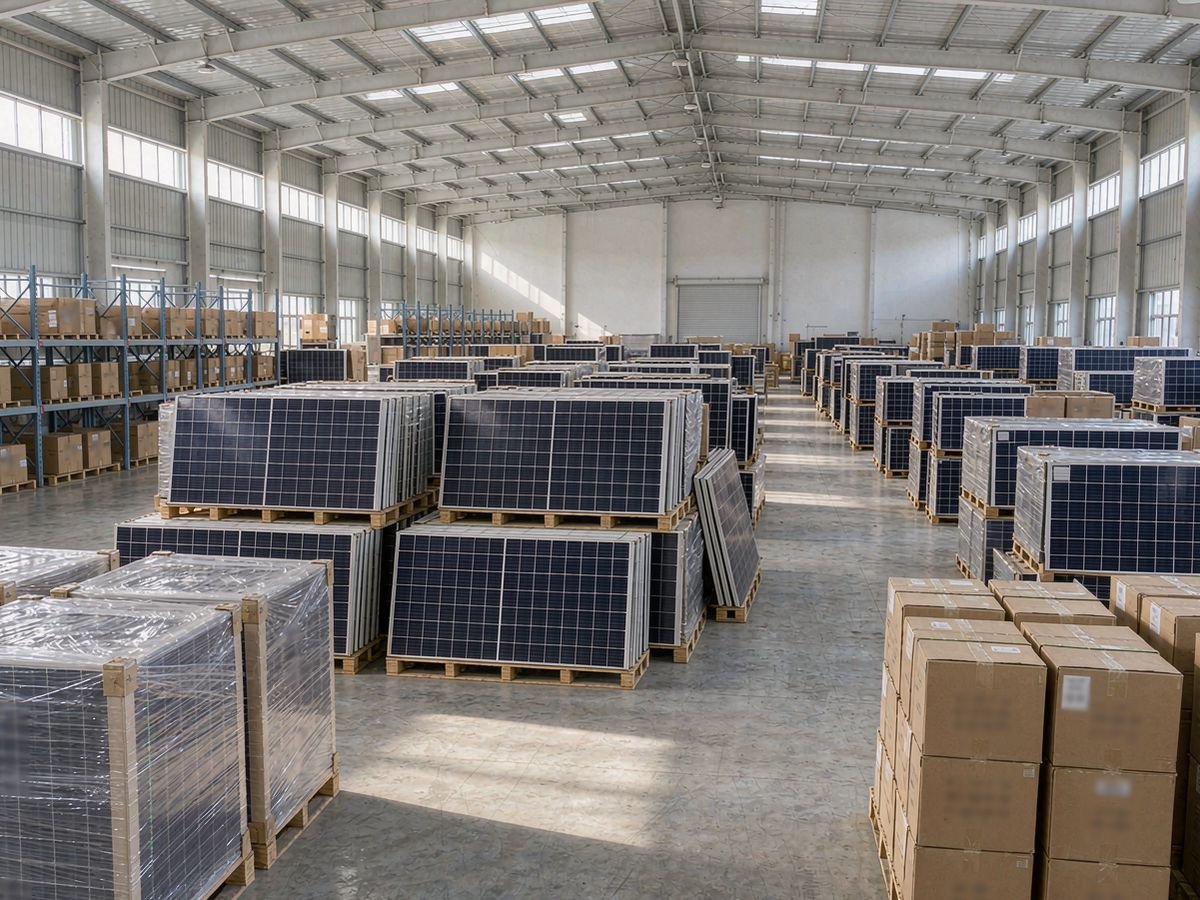
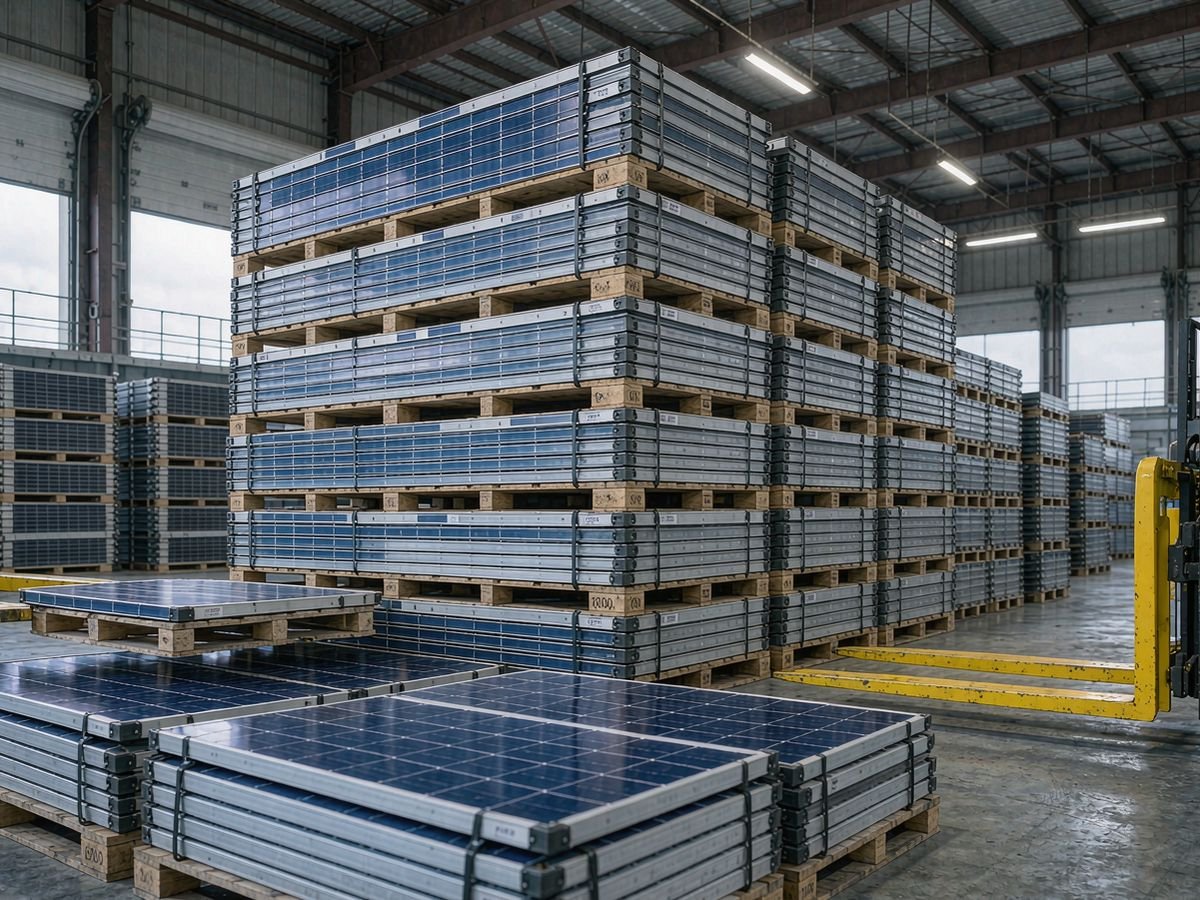
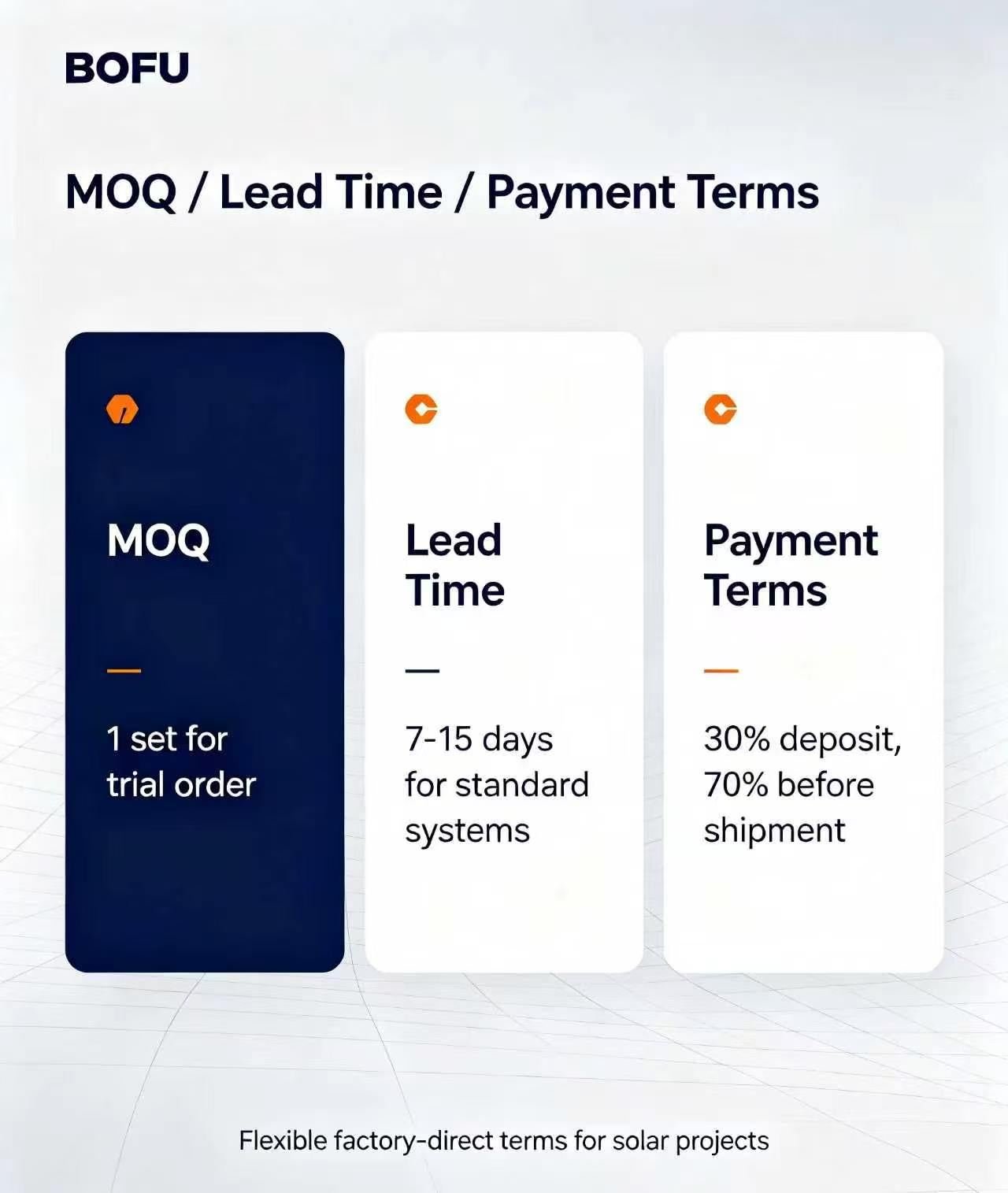
MOQs exist because production runs carry fixed costs — machine setup, materials procurement, testing. Tier-1 panel giants answer with container-loads (around 1 MW, six figures). A factory that stocks common configurations can go far lower: at Mars Solar the minimum for a complete solar power system is one set — even a small hybrid build — 10 panels for loose module orders, single units for inverters and LFP batteries, and 50–100 panels for OEM-branded production. Trial orders exist to be tried: order one, test it, then scale with better unit pricing as volumes grow. That flexibility is the heart of sensible solar MOQ lead time and payment terms.
Lead Time: The Honest Timeline
| Stage | Duration | What happens |
|---|---|---|
| Order confirmation | 1–2 days | Payment verified, PI issued, specifications locked |
| Materials procurement | 3–7 days | Panels, inverter, battery, structure sourced |
| Assembly & integration | 5–10 days | System assembled, components matched and calibrated |
| 72-hour full-system test | 3–4 days | Complete system runs at simulated load — faults mean rebuild |
| Documentation | 2–3 days | Invoice, packing list, C/O, test reports |
| Packaging & pickup | 1–2 days | Export crating, container loading |
Add it up: 15–28 days from payment to ready-for-shipment for standard configurations, 20–35 days for large 500kW–1MW builds, 20–40 for OEM branding. Then sea transit: 7–10 days to Manila, 25–32 to Mombasa, 28–35 to Lagos. Plan around Chinese New Year (factories close 1–2 weeks) and Q4 port congestion — order in October–November for clean Q1–Q2 delivery.
Payment: Structures That Protect Both Sides
On solar MOQ lead time and payment terms, the standard for new relationships is 30% TT deposit, 70% before shipment. Orders above roughly $100,000 warrant a letter of credit at sight ($300–800 in bank fees, both parties protected — funds release only against shipping documents). Established partners graduate to open-account terms after a clean payment history. Sample orders under $5,000 typically run 100% TT for speed. What no legitimate factory will ask for: Western Union to an individual, cryptocurrency, or 100% prepayment on a large first order — treat each as a terminal red flag.
Our own terms: 30/70 as standard; repeat customers with three-plus transactions, or orders above $300,000, can move to 50% before shipment with the final 20% after commissioning.
What 72 Hours of Testing Buys You
Most factories test components. We connect the complete system — panels to inverter, inverter to battery — and run it at simulated load for 72 consecutive hours. Any fault code, thermal anomaly or performance deviation means the system is rejected and rebuilt. You receive the test report with photos and data logs alongside IEC certificates, serial-numbered packing list, commercial invoice and certificate of origin. Third-party inspection (SGS, BV, TÜV) is welcome at cost.
Warranty, in Plain Numbers
| Component | Product warranty | Performance warranty |
|---|---|---|
| Monocrystalline PERC panels | 12 years | 25 years linear |
| N-type TOPCon panels | 15 years | 30 years linear |
| Hybrid / off-grid inverters | 3–5 years | — |
| LiFePO4 batteries | 5 years | 10 years to 80% SoH |
Putting a first order together? The sequence is simple: send your project parameters (size, location, grid specs, budget) — quotation with full specifications returns within 24 hours — approve the PI, pay the deposit, and track production through testing to shipment. Full trade terms are listed on our contact page.