

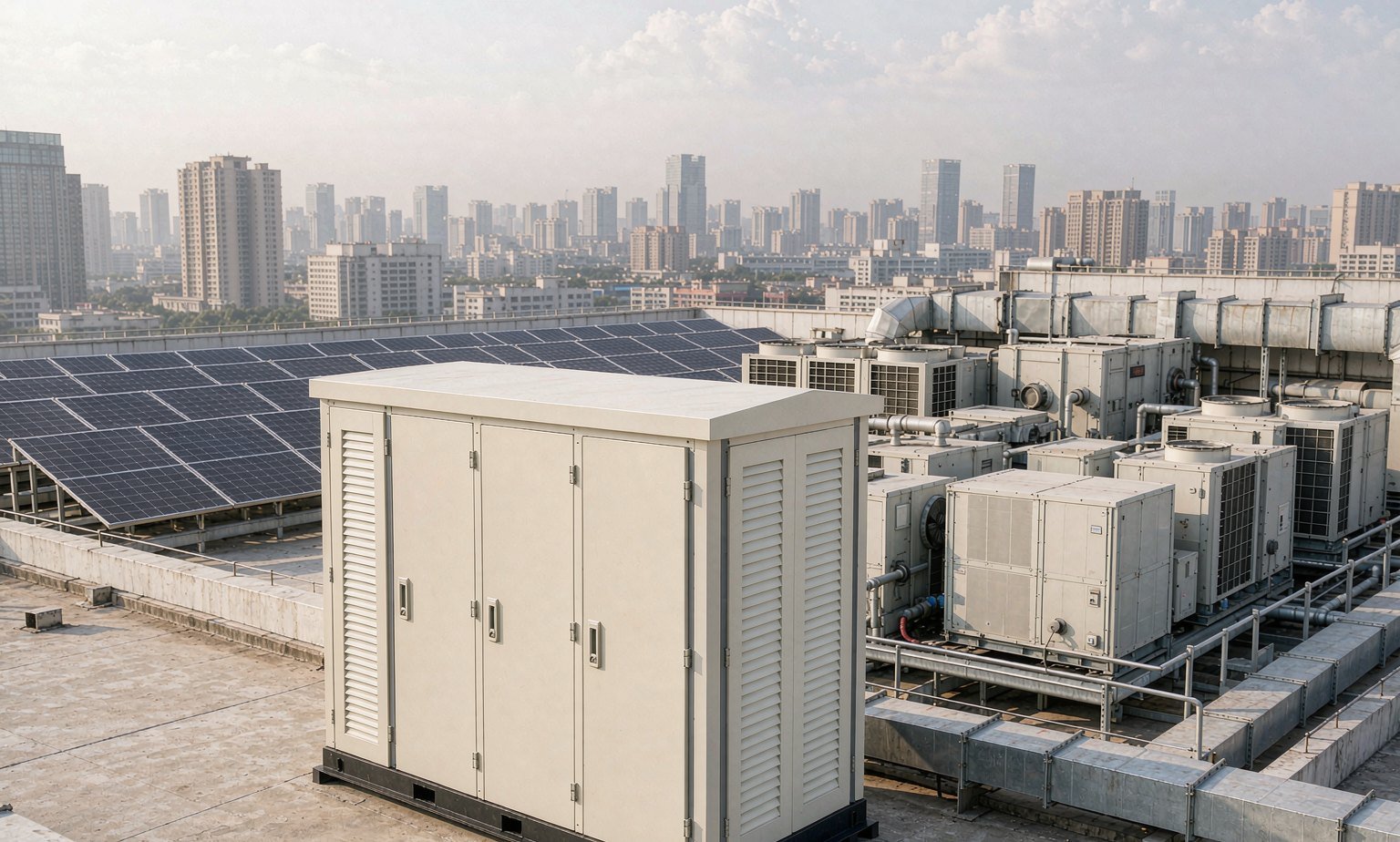
The photographs on this page are illustrative renders, not pictures of a specific client installation. The two diagrams are drawn from the arithmetic and the documents described in the text.
Quick answer: factory direct battery storage philippines
Factory direct battery storage philippines means buying from the company that assembles the cabinets, with the invoice issued to you and the bill of lading consigned to you. The factory sells ex-works or FOB; everything after the ship's rail belongs to you. That is the whole mechanism, and it explains both the saving and the risk in one sentence.
Three numbers decide whether the route is worth it. First, the CIF band for the reference system: $88,000 to $115,000 for a complete 100kW/215kWh unit. Second, the import friction: 1% duty, 12% VAT and a certificate per shipment. Third, the distribution margin you remove by not buying through a local reseller. On a single cabinet for one site, the third number is smaller than the first two, and the route is a poor trade. That is the honest answer to whether factory direct battery storage philippines is cheaper, and it depends on quantity rather than on supplier.
The same arithmetic runs the other way for a programme. A 500kW roll-out across three sites carries the same documentation cost per shipment, while the margin removed scales with the order. Factory direct battery storage philippines becomes the cheaper route by a wide margin somewhere around the second or third unit, which is why this page spends more words on documents than on prices.
One distinction before the detail. A trading company that says it has a factory is not a factory. Factory direct battery storage philippines only pays if the party invoicing you also assembles, tests and warranties the cabinet, because every advantage of the route (the factory acceptance test, the cell-to-module trace, the spare-parts commitment) disappears when the seller is a broker. Ask for the factory's address before you ask for its price list; factory direct battery storage philippines starts with a place, not a quotation.
The three routes, and who carries what
Every commercial battery purchase in the Philippines takes one of three routes, and only one of them is factory direct battery storage philippines. They differ less in equipment than in who signs the customs entry, and that signature decides price, lead time and who answers the phone when a module fails in year four.
| Local distributor | Trading company | Factory direct | |
|---|---|---|---|
| Who you sign with | Philippine entity holding stock | Export agent, no assembly line | The manufacturer |
| Importer of record | The distributor | Usually the agent, sometimes you | You |
| Price basis | Landed cost plus margin | FOB plus sourcing fee | Ex-works or FOB |
| 12% VAT | Priced in, you never see it | Depends on the consignee | You pay, then credit it |
| PS or ICC certificate | Already held | Often neither | Factory holds PS, or you file ICC |
| Warranty held by | The distributor | A broker, backed by the factory | The factory |
| Spare parts | In country | Air freight each time | Sea freight, or a spares kit on the order |
| Best fit | One unit, fast energisation | Rarely for storage | Two or more units, repeat programme |
Read the table by column, not by row. The price column is the one buyers compare and the least informative. The importer-of-record column decides who fronts the VAT and who waits a month or two to reclaim it. The certificate column decides whether the container clears in a week or sits at the port while a broker negotiates with the Bureau of Customs. Three columns, three different owners, and only one of them is the seller in a factory direct battery storage philippines deal.
For factory direct battery storage philippines, the uncomfortable entry is the second column, third row: you. There is no local stock, no in-country spare cabinet and nobody to call on a Saturday. That is a real cost and it belongs in the comparison. The route suits an operator with an electrical team on site far better than a single-property owner whose facilities work is contracted out.
What the shipment has to clear
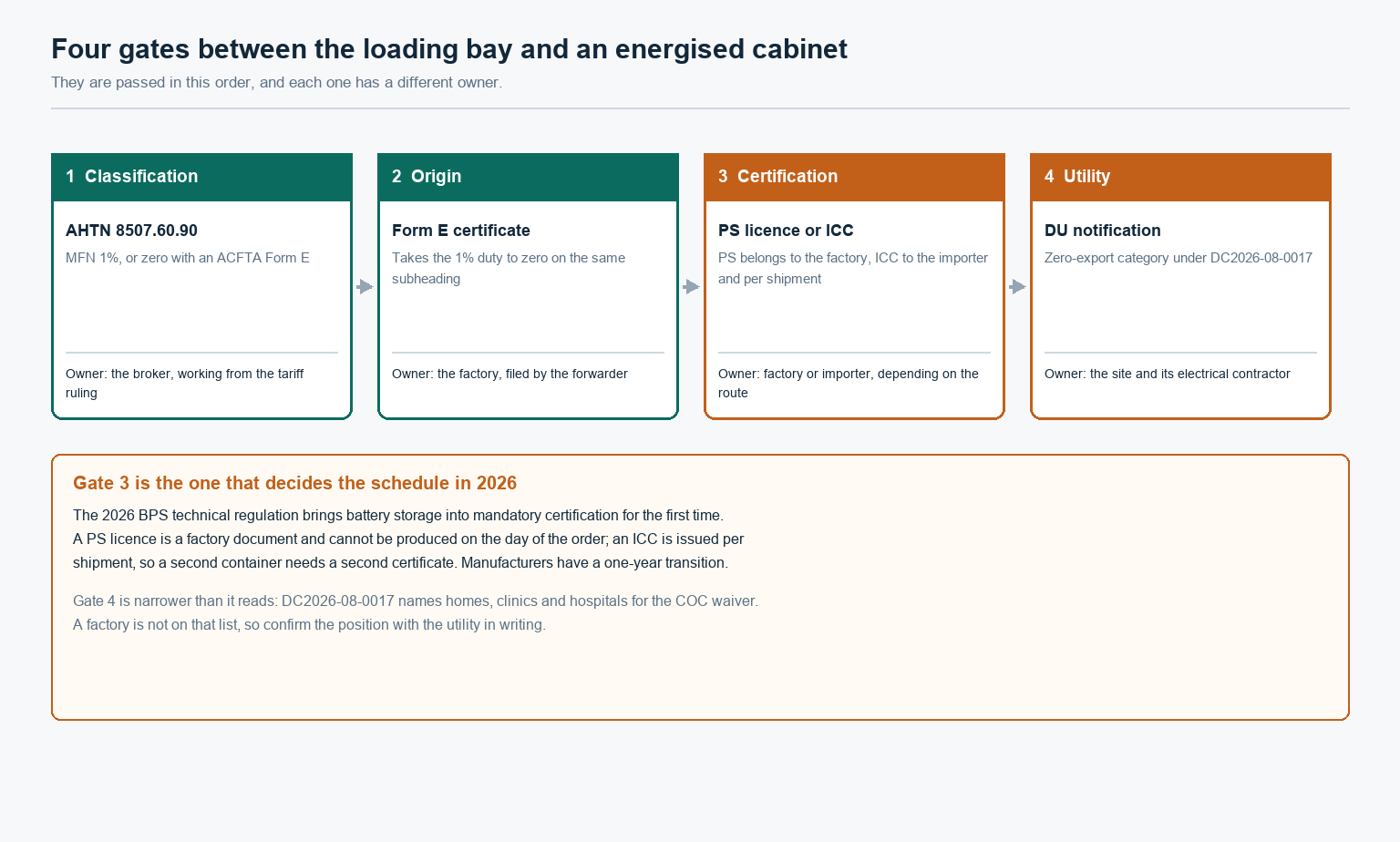
Four gates sit between a factory loading bay in Guangdong and an energised cabinet in Laguna, and they are passed in a fixed order. A factory direct battery storage philippines order that gets the sequence wrong pays for storage twice, once in demurrage and once in the schedule.
The first gate is classification. A factory direct battery storage philippines shipment declared under 85.04 as "machinery" or 85.37 as "control panels" is the commonest classification error in the category. The Tariff Commission's 2026 advance rulings include a containerised 5,015 kWh system classified at AHTN 8507.60.90, with the 2026 rates printed as MFN 1% ad valorem, ACFTA zero and RCEP zero. That matters because a containerised battery is often mistaken for machinery and declared under chapter 85.04 or 85.37, which changes both the rate and the agency that inspects it.
The second gate is origin. The 1% MFN rate applies when the goods arrive without a preferential certificate. A Form E certificate of origin, issued under the ASEAN-China arrangement, takes the same subheading to zero. On a $101,500 CIF value that is $1,015 of duty, which funds an afternoon of paperwork and is worth claiming on every shipment. That is the cheapest single saving available to a factory direct battery storage philippines importer, and buyers who let the forwarder "handle the documents" routinely lose it.
The third gate is product certification, and this is where 2026 changed the ground. The Department of Trade and Industry's Bureau of Product Standards notified a technical regulation in May 2026 that brings battery energy storage systems into mandatory certification for the first time, alongside PV modules, inverters, rapid shutdown devices, charge controllers and PV cables. Conformity runs two ways: a PS licence held by the manufacturer, which for an overseas factory requires a Philippine compliance representative, or an ICC held by the importer and issued per shipment.
The measure gives manufacturers a one-year transition from effectivity. For factory direct battery storage philippines, that means the certificate carries a lead time of its own, measured in weeks and not in hours.
That single change is the most consequential item on this page. A PS licence is a factory document and it cannot be produced on the day of the order. An ICC is an importer document and it is issued per shipment, which means a second container needs a second certificate. Any factory direct battery storage philippines plan that assumes the certificate is a PDF the sales manager emails over is a plan that ends with a container on the dock and no release.
The fourth gate is the distribution utility, and here the rules got easier in August 2026. Department Circular DC2026-08-0017 created the self-generating facility zero-export category: a solar system with safeguards that prevent any export to the distribution grid. For qualifying systems the ERC Certificate of Compliance requirement is waived in homes, clinics and hospitals, building permits are no longer required where the structure already holds the relevant clearance, and utilities are directed to drop unnecessary pre-installation clearances, technical permits and inspection charges. Existing analogue meters may stay in place through a 12-month transition. A factory direct battery storage philippines buyer should read the circular as a solar clause with a storage consequence, not as a storage clause.
Read the list of waived categories carefully. Homes, clinics and hospitals are named; a factory is not. A commercial site that wants the zero-export treatment should expect to keep the Certificate of Compliance unless its distribution utility confirms otherwise in writing, and a factory direct battery storage philippines schedule that assumes the waiver applies to an industrial load is a schedule that slips by a quarter.
What the CIF price covers
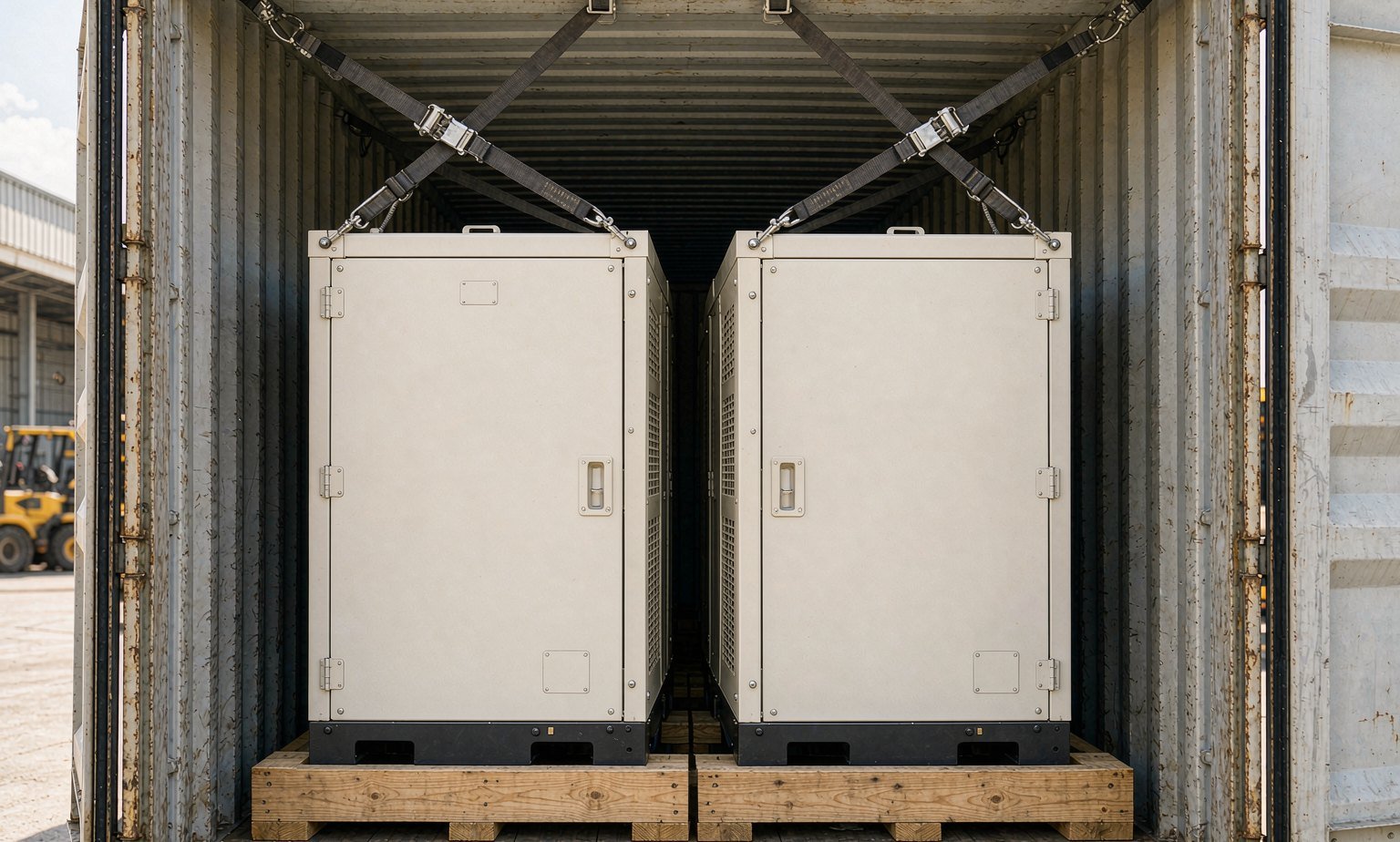
Factory direct battery storage philippines pricing is quoted at the point where the factory's responsibility ends, and that point is negotiable in a way that headline prices hide. Ex-works means the buyer collects in Foshan. FOB means the seller loads and clears export at the port. CIF means the seller pays ocean freight and marine insurance to Manila, Cebu or Davao, and nothing beyond the destination port.
Ask which of the three is being quoted before comparing two numbers, because the gap between ex-works and CIF on a single 215 kWh cabinet is the freight, the insurance and the risk, and it is routinely presented as a discount. A quote that says "FOB $X" against another that says "CIF $Y" is not a comparison; it is two different products. A factory direct battery storage philippines comparison that mixes the two Incoterms is worthless whatever the numbers say.
The reference figure we publish is CIF: $88,000 to $115,000 for a complete 100kW/215kWh system, the same unit specified on our 100kW / 215kWh BESS cabinet page, which includes the cabinet, the power conversion unit, the switchgear, factory testing and the commissioning support package. It does not include Philippine duty, VAT, port charges, inland haulage or site works. Those are the next section, and they are the reason a factory direct battery storage philippines budget built on the CIF figure alone comes up short by a fifth.
Freight is also where the schedule is set. A single 215 kWh cabinet travels as a 20-foot container or on a flat rack, and the sailing frequency from South China to Manila is high enough that the ocean leg is rarely the constraint. Clearance is. Factory direct battery storage philippines lead times are quoted in weeks of paperwork, not weeks of sailing. Ask for the sailing schedule and the certificate schedule separately, and the longer of the two is your real date.

The landed cost, line by line
Here is the ladder on the midpoint of the published CIF band for a factory direct battery storage philippines order, $101,500. Every line is a percentage you can replace with your own number, and the arithmetic is short enough to redo on a calculator before you sign anything.
| Line | Basis | Amount |
|---|---|---|
| CIF Manila | Complete 100kW/215kWh system, midpoint of band | $101,500 |
| Import duty | 1% MFN on HS 8507.60.90, or zero with Form E | $1,015 |
| VAT | 12% of CIF plus duty | $12,302 |
| Port, arrastre, wharfage, broker | 2% of CIF allowance, varies by port | $2,030 |
| Inland haulage | One 20-foot container, Manila to a Laguna site | $600 |
| Installation, commissioning, training | 6% of CIF | $6,090 |
| Cash out | $123,537 | |
| Less input VAT credit | Only if you are VAT-registered | -$12,302 |
| Net cost | $111,235 |
The formula in one line: net cost = CIF times 1.01 times 1.12 plus 2% of CIF plus haulage plus 6% of CIF, minus the VAT. Applied across the $88,000 to $115,000 band, it puts a factory direct battery storage philippines installation at $449 to $586 per kWh of storage, against a CIF figure of $409 to $535 per kWh before any of it.
Now the step most budgets get wrong. The 12% is not a cost if you are VAT-registered; it is working capital. You pay $12,302 at the port and credit it against output VAT on the next return, so the real expense is the financing on that amount for one to three months. For a non-registered importer, a cooperative or a homeowners association, it is a genuine 12% and it is not recoverable. Same shipment, two different factory direct battery storage philippines economics.
The installation allowance is the line to interrogate. Six per cent of CIF covers mechanical placement, DC and AC terminations, commissioning and operator training on a straightforward site. It does not cover a transformer upgrade, a new concrete pad, cable trenches across a yard, or the utility's connection works. Those are quoted separately by a Philippine electrical contractor, and on a congested urban site they can exceed the equipment's own freight bill. It is also the line a factory direct battery storage philippines buyer most often forgets when comparing two offers.
How to verify a factory before you wire a deposit
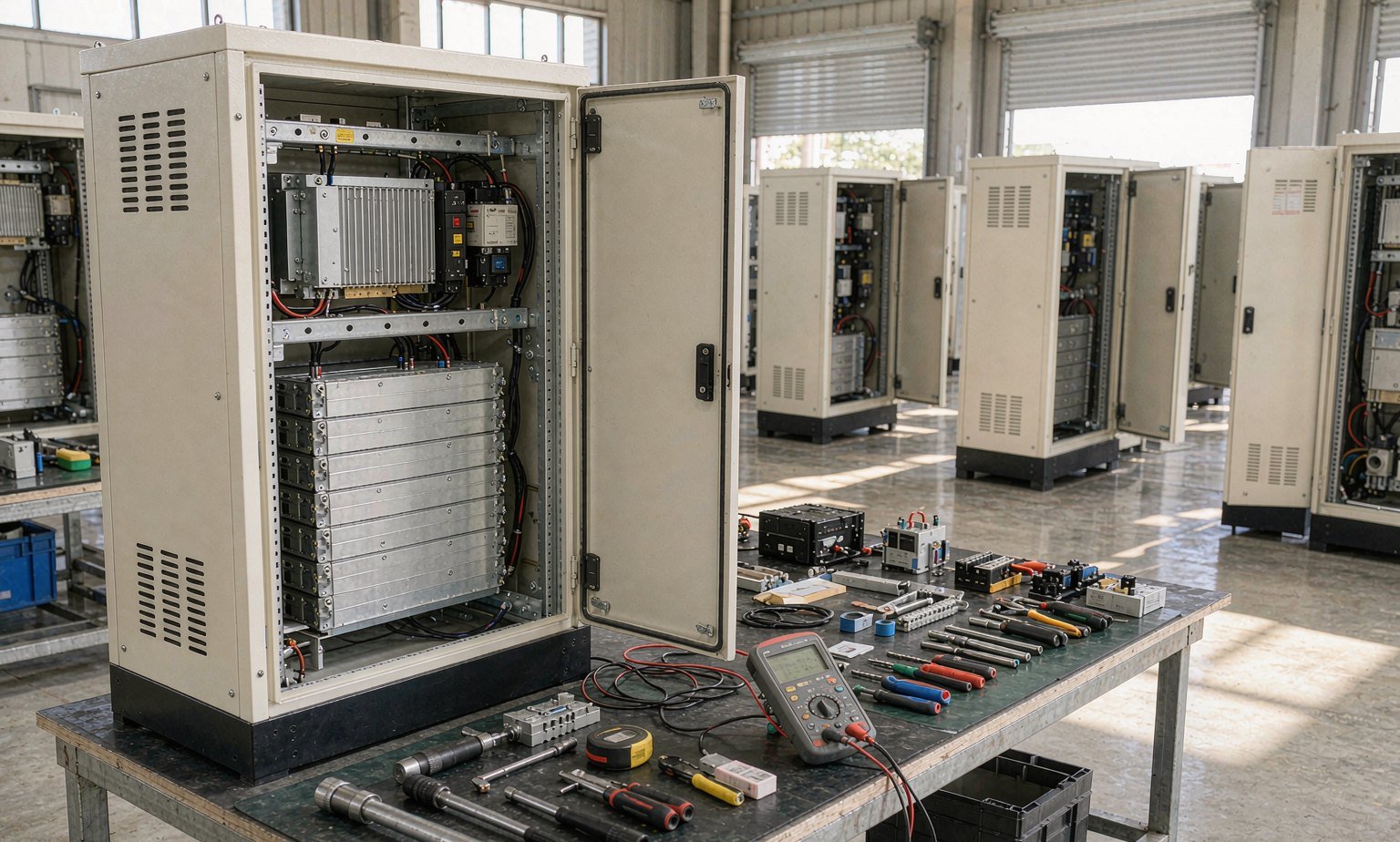
The cheapest protection against a bad factory direct battery storage philippines order is a factory acceptance test you attend, or pay a third party to attend. Everything else on this list is a document that can be produced after the fact; the test is the one thing that has to happen while the cabinet is open.
Start with the physical plant. Our assembly floor is 19,847 square metres of production and assembly space, excluding warehouse and yard, and a buyer is entitled to ask any supplier for the same figure and then check it against a video walk-through with a clock in frame. A trading company cannot do that walk-through, which is the point of asking. Factory direct battery storage philippines only means something if there is a floor to walk on.
Then the test reports, matched to the hardware. IEC 62619 covers safety of industrial lithium cells and batteries; IEC 63056 covers the same for cells used in electrical energy storage systems; UN38.3 covers transport. A report is only meaningful if the model number on it matches the model on the invoice, and if the cell maker named inside it matches the cells in the cabinet. Factory direct battery storage philippines buyers who accept a report "for a similar model" have bought an unverified product with a verified-looking folder.
Third, the cycle-life claim. Our battery warranty is 10 years or 6,000 cycles at 80% depth of discharge, whichever comes first, and it is written on the terms page rather than in a brochure. Ask for the test conditions behind any competing number: cell temperature, charge and discharge rate, and what counts as end of life. A cycle count without those three is marketing, and a factory direct battery storage philippines warranty written without them is a number rather than a commitment.
Fourth, traceability. A factory can tell you which cell batch went into which module and which module went into which cabinet, because the assembly record exists. A reseller cannot. That record is what makes a warranty claim in year six resolvable rather than theoretical, and it costs nothing to ask for a sample before the order. On a factory direct battery storage philippines order of two or more cabinets, ask for the record of the last unit shipped to the region.
What the quote must break out
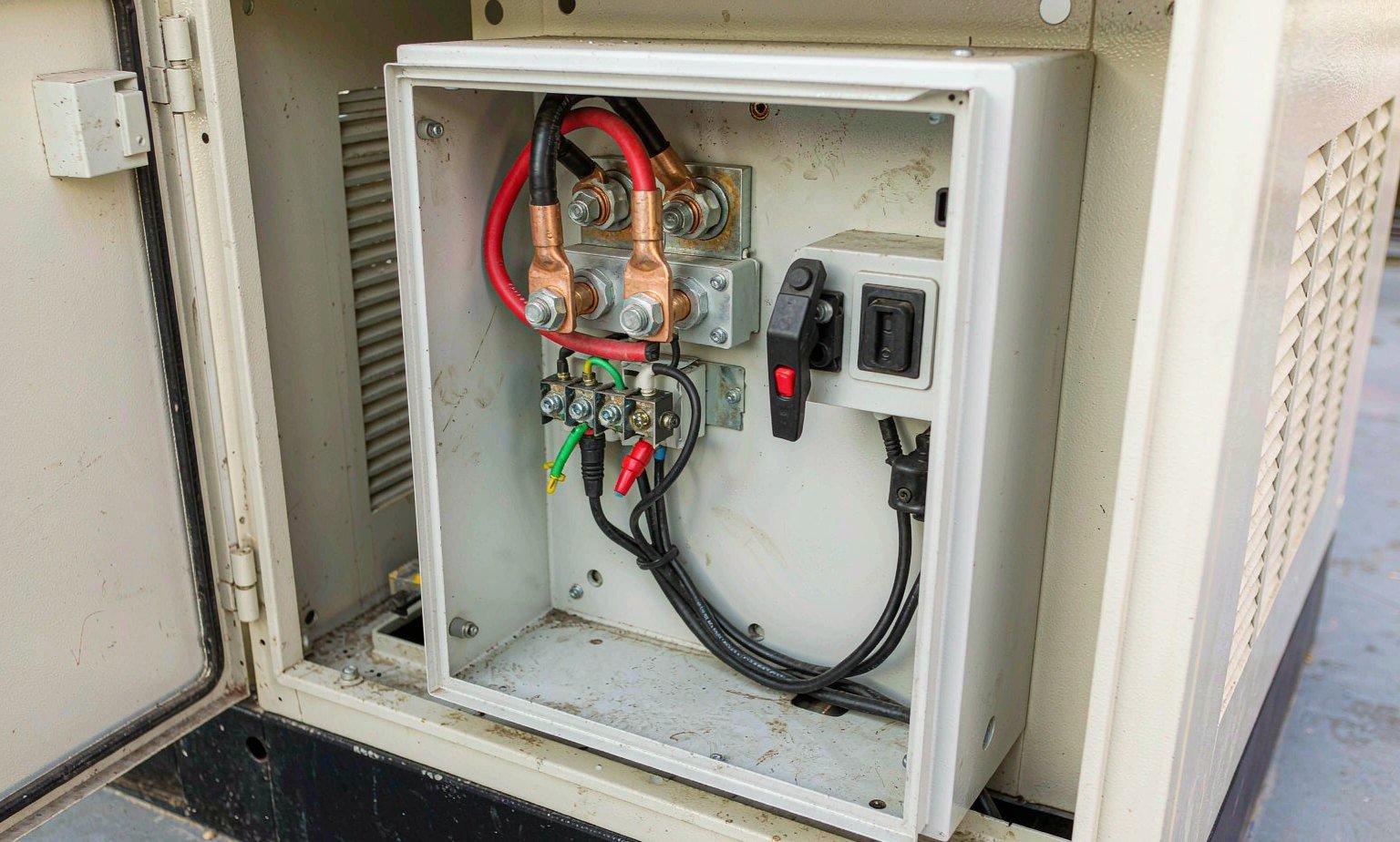
A factory direct battery storage philippines quotation should be a scope document, not a price. The difference shows up at commissioning, when the missing lines become change orders. The table below is the shortest version we would accept from any supplier, including ourselves.
| Item | What to require in writing |
|---|---|
| Battery | Nominal kWh, usable kWh at stated depth of discharge, chemistry, cell maker, module configuration |
| Power conversion | Continuous kW, overload rating and duration, efficiency at 50% and 100% load, grid-forming or grid-following |
| Thermal | Cooling type, rated ambient, derating above it, cell temperature spread under load |
| Enclosure | IP rating, corrosion class, dimensions, weight, lifting points, pad requirements |
| Protection | Breaker ratings, fuse type, surge protection, earth-fault behaviour, emergency stop location |
| Controls | EMS functions listed, protocols supported, remote access method, who owns the data |
| Testing | Factory acceptance test procedure, the readings recorded, whether you may witness it |
| Delivery terms | Incoterm and named place, packing, lashing, insurance, who clears export |
| Documents | Test reports by model, certificate of origin, packing list, weight ticket, PS or ICC position |
| After-sales | Warranty years and cycles, response time, spare-parts list and price, remote diagnostics |
Two lines in that table decide most disputes. "Usable kWh at stated depth of discharge" prevents the oldest substitution in the category, where a nameplate figure is quoted and a smaller usable figure is delivered. "Whether you may witness the test" tells you within one email whether the seller is a factory, because a factory says yes and a broker changes the subject. That one question is the cheapest factory direct battery storage philippines due diligence available, and it costs one email.
Same order, seven markets
The Philippines is the market this page is written for, and the four gates above are specific to it. Buyers sourcing for other regions run a different set, and a factory direct battery storage philippines quotation template lifted unchanged into Lagos or Mombasa will miss the local certificate entirely.
| Market | Import gate that decides the schedule | Tariff, USD per kWh | What changes for a factory-direct order |
|---|---|---|---|
| Philippines | HS 8507.60.90 at 1% or zero with Form E, 12% VAT, BPS PS or ICC, DU notification for zero-export. The only market here where factory direct battery storage philippines routinely means an ICC per shipment | 0.156 | You file the ICC per shipment; the PS licence belongs to the factory |
| Nigeria | SONCAP product certificate before Form M, then a shipment certificate per consignment and a PAAR before release | 0.049 | Budget $500 to $2,000 for the product certificate and $350 per shipment, and expect the PAAR to add days |
| Ghana | GRA entry plus the utility's approval for any grid-connected system | 0.175 | Second shipments repeat the entry but not the product certificate |
| Kenya | EPRA licensing for the installation, plus KEBS conformity at the port | 0.171 | The installer's licence is a local document; the factory's file does not cover it |
| Central America | National regulator approval for grid connection, customs entry under 8507.60 | 0.198 to 0.255 | Spanish-language datasheets and labels are usually required at inspection |
| Caribbean | Utility interconnection approval, customs entry, hurricane-rated anchoring | 0.242 to 0.370 | Wind loading on the pad and enclosure becomes a design input, not an accessory |
| Middle East | Utility approval per emirate or governorate, customs entry, high-ambient derating | 0.090 to 0.156 | Cooling specification moves up the quote; a 50 degree ambient is not a tropical design |
The Philippines sits in an unusual position in that list. Its commercial tariff is high enough that storage pays on avoided purchase alone, without relying on export credits or demand-charge games, and its import friction is moderate. That combination is why factory direct battery storage philippines has become a real channel rather than a niche, and why the certificate question carries more weight here than the duty rate.
For a Philippine site the sizing question comes before the sourcing question. A 100kW peak with a two-hour outage design lands on the 215 kWh cabinet, and the arithmetic behind that is on our battery storage sizing for a 100 kW peak load page. Buyers who size first and source second avoid the most expensive mistake in this market, which is a correctly imported cabinet of the wrong capacity.
The import side has its own reference page. Our Philippines solar import business guide covers the Bureau of Customs entry mechanics in more detail, and if you also sell into West Africa the SONCAP route for battery storage in Nigeria shows how different a second market's gate really is. Reading both before a two-market order is cheaper than discovering the difference at the port.
What a 215 kWh cabinet can actually carry is a separate question, and it is answered on our 100kW/215kWh load capability page with runtime by load class. Sizing, sourcing and load capability are three different documents, and a factory direct battery storage philippines order needs all three before the purchase order is worth signing.
Six ways a factory-direct order fails
None of these failures is about the battery. All six are about the space between the factory and the site, which is exactly the space a distributor normally occupies and the space a factory direct battery storage philippines buyer takes over. Each one below has a mitigation that costs less than the failure.
The certificate arrives after the container. This is the classic factory direct battery storage philippines failure. The vessel berths, the entry is filed, and the ICC is not issued. Storage at the port accrues daily and the utility connection date is lost. Mitigation: file the certification application before the goods ship, not after.
The quote was ex-works and nobody noticed. The difference between ex-works and CIF is freight, insurance and risk, and it appears on the forwarder's invoice three weeks after the purchase order. Mitigation: write the Incoterm and the named place in the purchase order itself.
The site was never surveyed for the pad. A 215 kWh cabinet needs a level, drained, load-bearing base with clearance for door swing and cable entry. A factory direct battery storage philippines order that skips the survey discovers this on delivery day, with a crane on the clock.
The transformer is too small. This is the failure a factory direct battery storage philippines buyer is least likely to see coming. Adding a 100kW converter to an existing service often pushes the transformer past its rating at peak. The utility then asks for an upgrade, which has its own lead time and cost, and the storage sits idle until it is done.
Nobody owns the commissioning. On a factory direct battery storage philippines project the factory supplies a commissioning procedure; the local contractor supplies labour; neither owns the outcome. Mitigation: name one party responsible for energisation in the purchase order, and make the final payment depend on it.
The spare-parts list was never priced. A failed module on an island site waits for sea freight. Mitigation: buy a spares kit with the first order, priced as a line item, and ask what the top five failure items are. A factory direct battery storage philippines buyer without a spares kit has traded a distributor margin for an availability risk.
Warranty, thermal design and the ten-year question
The warranty is the part of a factory direct battery storage philippines purchase that is hardest to enforce from 1,800 kilometres away, so it is worth reading before the price. Our terms state 12 years product and 25 years linear output for modules, 10 years or 6,000 cycles at 80% depth of discharge for the battery, 5 to 10 years for the inverter, and 10 years on system integration.
Thermal design decides whether that cycle count is reachable. Cabinets up to 261 kWh are air-cooled as standard; containers from 500 kWh upward are liquid-cooled as standard, with cell temperature spread held to 2 degrees Celsius. The distinction is not marketing. A factory direct battery storage philippines cabinet of 215 kWh, air-cooled and installed in a Cebu warehouse at 35 degrees ambient, performs differently from the same cabinet in an air-conditioned plant room, and the warranty is written against a temperature the site has to deliver.
Ask two questions of any supplier. What ambient is the continuous rating quoted at, and what is the derating curve above it. A factory direct battery storage philippines quote that answers both is a quote you can design against; one that quotes a single kW figure with no ambient is a quote that will be renegotiated in the first hot week.
Delivery, from purchase order to energisation
The schedule has four blocks and only one of them is sailing. Documentation and certification run first, production and factory testing run second, freight and clearance run third, installation and commissioning run last. Compressing the first block is how a factory direct battery storage philippines project arrives early at the port and late at the switchboard.
On a standard 100kW/215kWh factory direct battery storage philippines order, production and factory testing are measured in weeks, the ocean leg from South China to Manila is short relative to the paperwork, and clearance is the variable. Budget the certification block first and the rest follows; budget the freight first and the rest slips.
One practical note on payment. A factory direct battery storage philippines order is normally split across deposit, pre-shipment and balance on commissioning, with the factory acceptance test sitting between the first two. If a supplier asks for the full amount before the test, the route has stopped being factory direct in any sense that matters and become an unsecured advance. A factory direct battery storage philippines payment schedule that front-loads everything is a red flag about the counterparty, not about the equipment.