
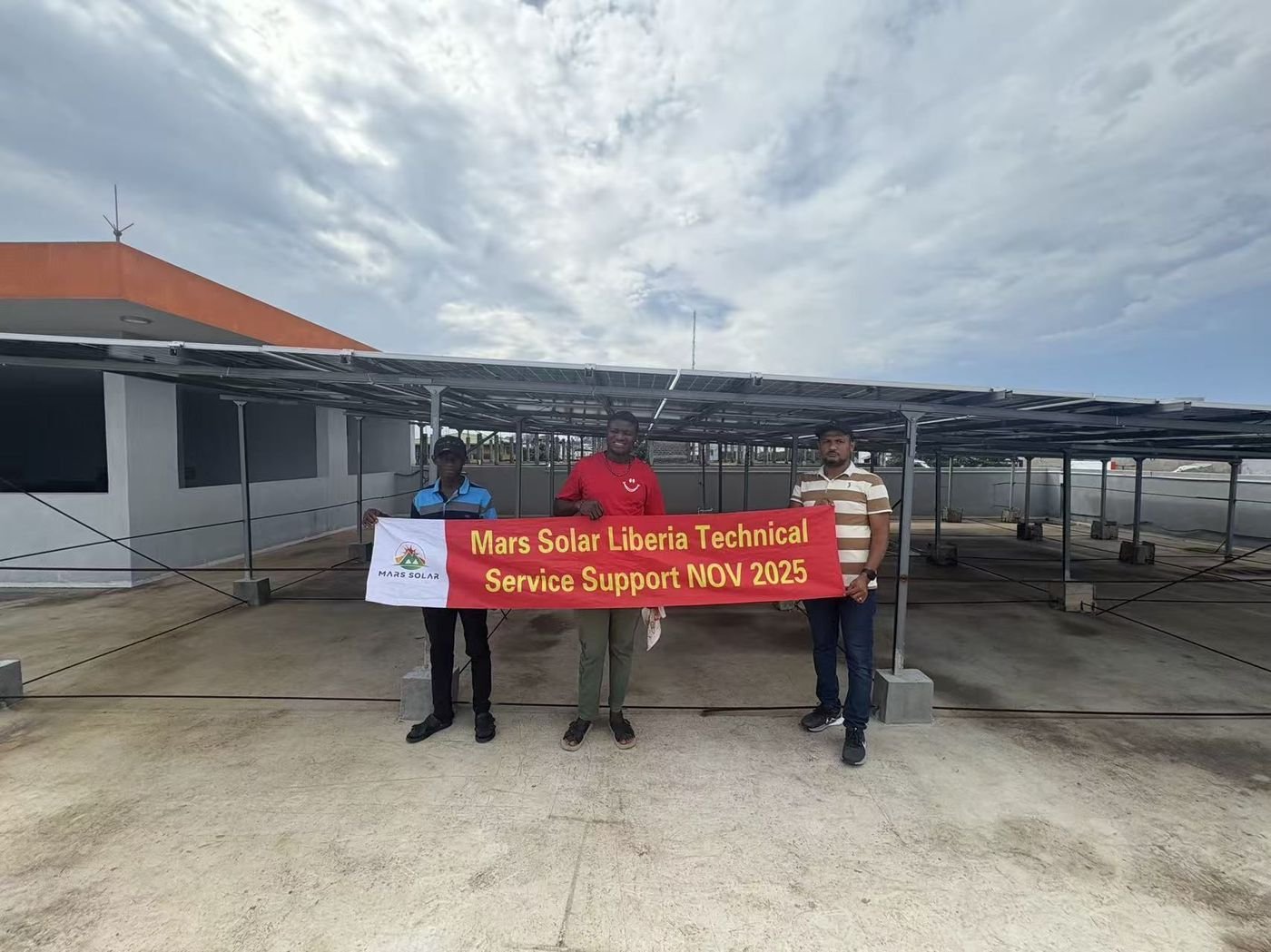
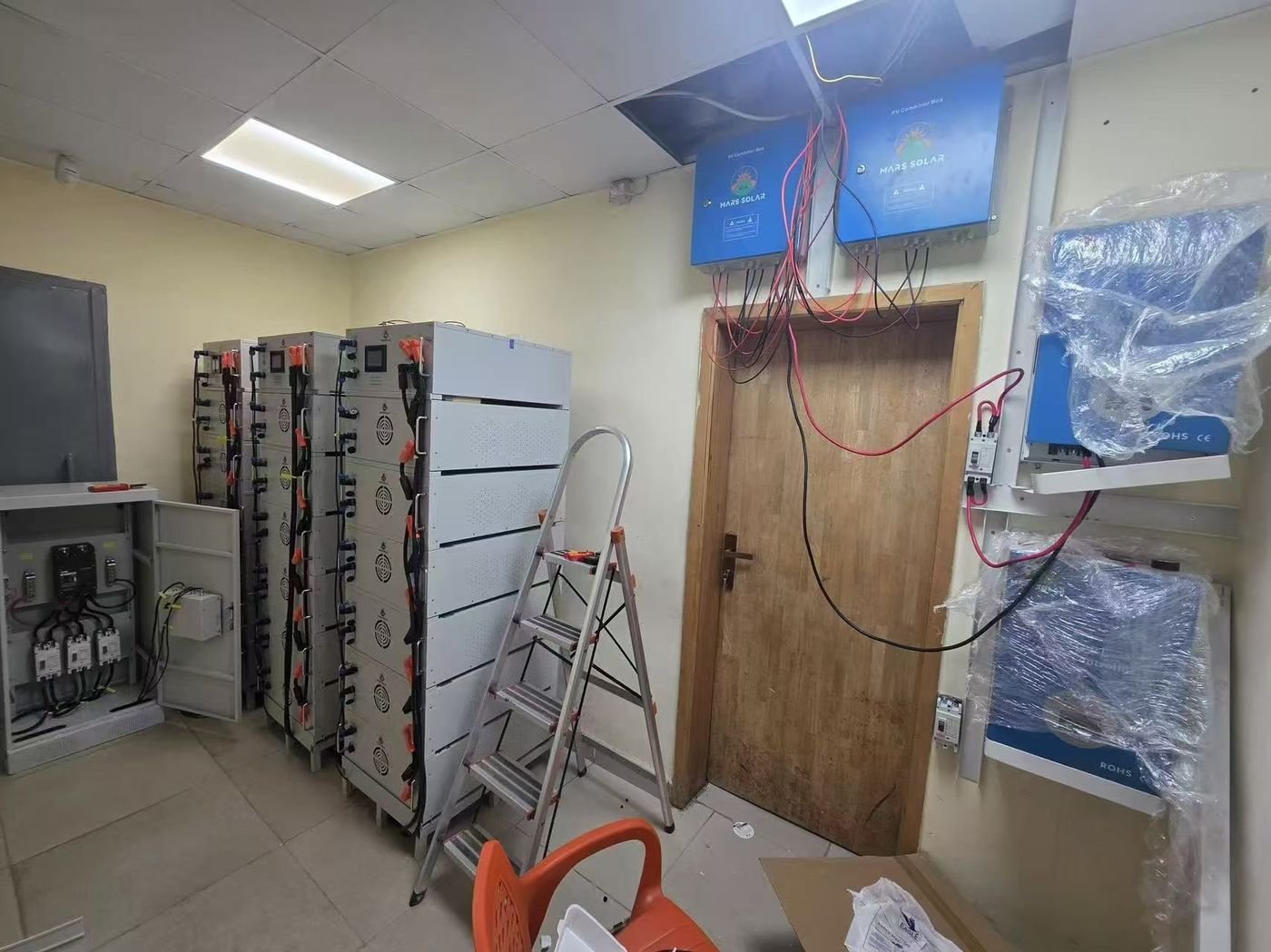
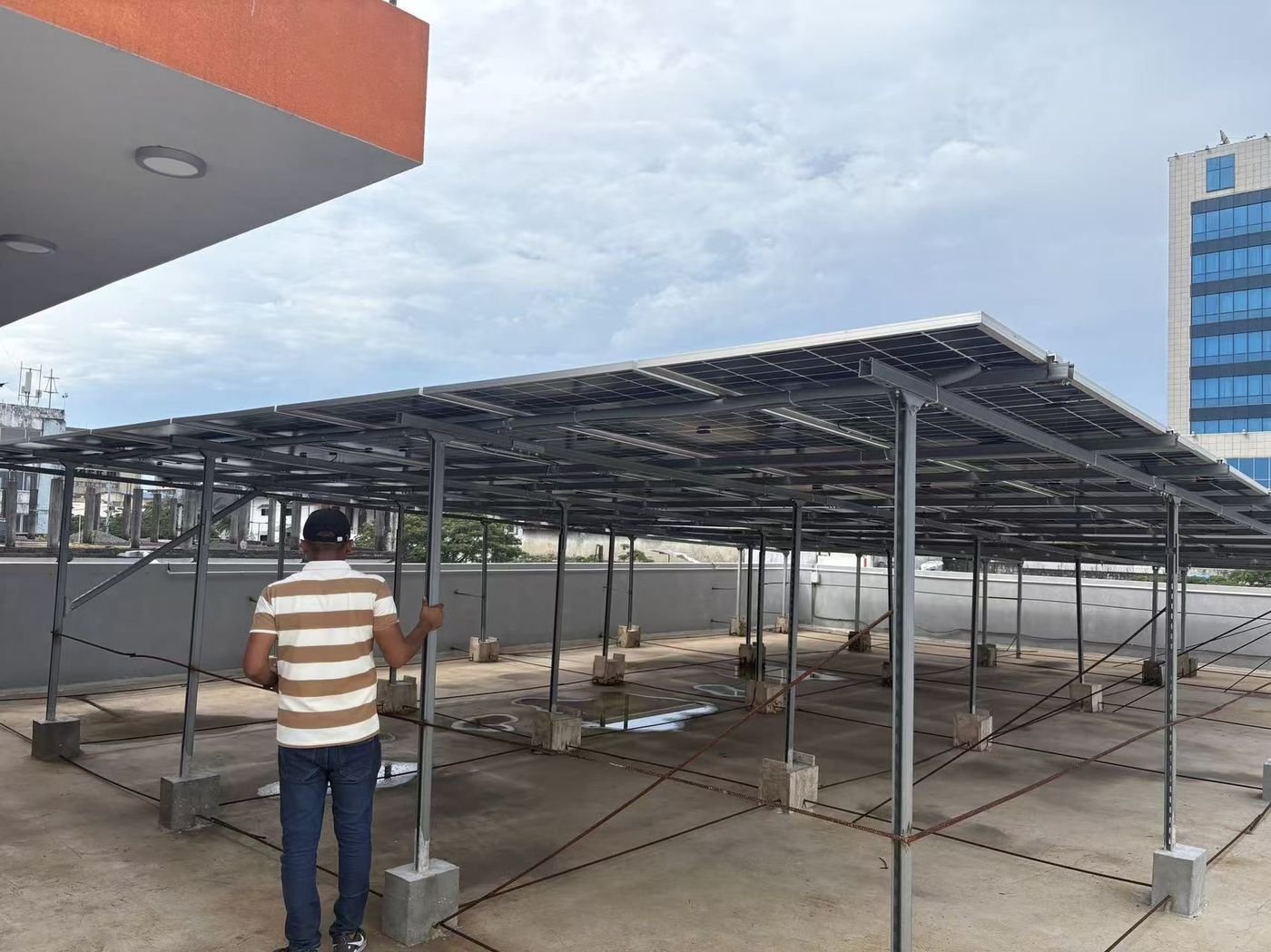
This bank branch in Monrovia depended on diesel generators for 60% of its operating hours. Liberia's grid delivers power only intermittently, and a bank cannot tolerate downtime — ATMs, security systems, and transaction servers must run 24/7. Monthly diesel and grid costs totaled $2,800.
The branch required zero-interruption power for banking operations. Diesel generators were noisy, required constant maintenance, and fuel price volatility made budgeting impossible. The bank needed a silent, reliable, and cost-predictable alternative.
Mars Solar designed a hybrid solar power system with battery storage sized to carry the full branch load through nights and grid outages. The LFP battery bank provides 8+ hours of autonomy at average load, with seamless switchover in milliseconds.
| Solar PV Capacity | 50 kW (Tier-1 mono PERC modules) |
|---|---|
| Battery Energy Storage | 150 kWh LFP, 6,000-cycle rated |
| Inverters | Hybrid inverter, 3-phase 50kW |
| System Type | Hybrid: grid + solar + battery |
| Autonomy | 8+ hours at average load |
| Installation | 4 days, Mars Solar certified team |
The solar power system now covers 85% of the branch's annual energy needs. Monthly energy costs fell from $2,800 to under $500. The generators now run only during scheduled maintenance tests. Noise complaints from neighboring offices stopped entirely.
| Monthly savings | $2,300 |
|---|---|
| Annual savings | $27,600 |
| Payback period | 13 months |
| Energy cost reduction | 82% |
| Grid independence | 85% of annual demand |
“Our branch has not experienced a single minute of downtime since installation. The ROI was confirmed within 13 months by our own accounting.”
— Branch Manager, Monrovia Bank
A bank branch is a small load with an unforgiving availability requirement. ATMs, teller terminals, the branch server and the VSAT or fibre link all have to stay up — and a grid-tied system without storage shuts down exactly when the grid drops, which is the one moment the branch cannot afford it. That is why this system is hybrid rather than grid-tied-only.
Autonomy, not capacity, set the battery size. 150 kWh delivering eight-plus hours at the branch's average load implies an average critical draw near 19 kW (150 kWh ÷ 8 h) — teller positions, ATM, lighting, server and communications, but deliberately not air conditioning. Including the chiller plant would have roughly doubled the pack for no compliance benefit.
The daytime base load — lighting, teller positions, ATM, server and communications. Air conditioning is the largest single item in most branches and is usually left to the grid or to a separate chiller schedule.
Eight hours or more at average branch load. The arithmetic behind that figure is 150 kWh ÷ 8 h ≈ 19 kW of average critical load, so the real answer for your branch depends on which circuits you put behind the battery.
The hybrid inverter resynchronises and returns to solar-plus-grid operation, with the battery recharging from the array first. Transfer is automatic; what matters is that the switch-over time sits inside what your ATMs and server tolerate.
It is the figure recorded on this site, and it is achievable because branch load peaks during business hours — exactly when the array is producing. Sites with heavy night loads or 24-hour cooling will land lower.
The pack is rated for 6,000 cycles. Real calendar life depends on depth of discharge and ambient temperature, and both are set by how the system is configured rather than by the cell datasheet alone.
Branch banking cannot go dark: ATMs, teller terminals and network equipment need continuous power, and outages are routine across much of West Africa. A solar system for bank branches is sized against the full branch load rather than lighting alone, with several hours of battery autonomy built in. Our 40–125kVA BESS line is the standard building block for a solar system for bank rollouts, so the same design can be repeated across dozens of branches. If you are costing a solar system for bank, send us your load profile and your latest electricity or fuel bills — we return a sized design, a landed quote and a payback model within 24 hours.
Free system design and ROI estimate within 24 hours — based on your actual electricity bills.