
The reason commercial solar Ghana projects get approved is unglamorous: electricity is expensive relative to everything else a Ghanaian manufacturer buys, and solar has become the cheap input. At the reference tariff used on this page, a well-sited generation-led system pays for itself inside three to four years, which is comfortably inside the horizon most finance directors will accept.
The Numbers That Drive Commercial Solar Ghana Economics
| Input | Planning value | Basis |
|---|---|---|
| Commercial electricity tariff | $0.175 / kWh | GlobalPetrolPrices, December 2025 — re-run with your own ECG or NEDCo rate |
| Landed cost adder over CIF | +20% to +35% | Verified internal anchor: freight, duty, VAT and levies, local installation |
| Specific yield (planning range) | 1,400 to 1,600 kWh / kWp / year | Ghanaian planning range from coastal Accra and Tema to the middle belt — confirm per site |
| Daytime self-consumption | 80% to 95% | Wide spread; agro-processing and single-shift factories sit at the top of the range |
| Storage share of system cost | 35% to 50% | Verified internal anchor |
| Module price (FOB China) | $0.28 to $0.48 / W | Verified internal anchor |
Where you sit on the self-consumption row matters more in Ghana than almost anywhere else, because exports are not paid for at anything like the retail rate. A factory that processes during daylight hours — palm oil, cassava, fruit pulping, cold storage, textiles — self-consumes nearly everything it generates. A hotel whose load peaks in the evening self-consumes far less and will want storage to shift it.
Who Regulates What: PURC, the Energy Commission and Your Connection
Ghana has two bodies that matter to a buyer, and it is worth keeping them straight because they do different jobs.
PURC — the Public Utilities Regulatory Commission is the economic regulator. It sets and approves the electricity end-user tariffs you are paying, and it publishes the tariff categories your utility bills you under. If your question is "why is my tariff this number and what band am I in," PURC is the answer.
The Energy Commission sits on the technical side: licensing of solar installation contractors, technical standards and permitting frameworks for renewable energy systems, including the rules governing grid export and net-metering arrangements. The details of what may be exported and how it is credited — including the cap applied to own-generation capacity relative to your consumption — have changed over time, so confirm the current scheme with your installer and your utility before designing around it.
On imports, expect Ghana Standards Authority conformity requirements and standard duty-plus-VAT clearance at Tema or Takoradi. Ask your supplier for the same documentation pack every serious exporter carries: IEC 61215 and IEC 61730 module certificates, IEC 62109 inverter certification, IEC 62619 for lithium cells, plus manufacturer ISO 9001. Our full regional pricing walkthrough is in the solar system cost Ghana 2026 guide.
A Worked Payback: 300 kWp at a Ghanaian Factory
Our verified reference prices cover a 100 kWp array with 215 kWh of storage at $88,000 to $115,000 CIF, and a 500 kWp array with 1 MWh at $390,000 to $480,000 CIF. Most Ghanaian C&I buyers land between those two sizes, so here is the 300 kW step, derived transparently rather than invented.
Step 1 — Derived CIF price. Unit cost per kWp at the two anchors: $880 to $1,150 per kW at 100 kWp, and $780 to $960 per kW at 500 kWp. Interpolating to 300 kWp (halfway):
- Low: $880 + 0.5 x ($780 - $880) = $830 per kWp x 300 = $249,000
- High: $1,150 + 0.5 x ($960 - $1,150) = $1,055 per kWp x 300 = $316,500
- Module sanity check: 300 kW = 300,000 W x $0.28 to $0.48/W = $84,000 to $144,000
Step 2 — Landed cost. Applying the 20% to 35% adder:
- Low: $249,000 x 1.20 = $298,800
- High: $316,500 x 1.35 = $427,275
Step 3 — Generation and savings. At the yield midpoint of 1,500 kWh/kWp/year, 300 kWp produces 450,000 kWh a year. At 90% daytime self-consumption that is 405,000 kWh displaced at $0.175/kWh:
- 405,000 kWh x $0.175 = $70,875 saved per year
Step 4 — Payback, with and without storage. Storage runs 35% to 50% of system cost, so stripping the storage component out gives the generation-led case:
| Configuration | CIF cost | Landed cost | Payback at $70,875 / year |
|---|---|---|---|
| Generation-led (array plus balance of system) | $124,500 to $205,725 | $149,400 to $277,729 | 2.1 to 3.9 years |
| Full hybrid (300 kWp plus roughly 620 kWh of storage) | $249,000 to $316,500 | $298,800 to $427,275 | 4.2 to 6.0 years |
The storage figure is derived the same way as the array price: interpolating between 215 kWh at 100 kWp and 1 MWh at 500 kWp gives about 2.075 kWh of battery per kWp, or roughly 620 kWh at 300 kWp. The strategic read is simple — if your load is daytime, buy the array first and the payback is inside four years. If your load is evening, or if your operation loses money when the grid fails, storage earns its keep through uptime rather than through tariff arbitrage.
Specifying for Ghanaian Conditions
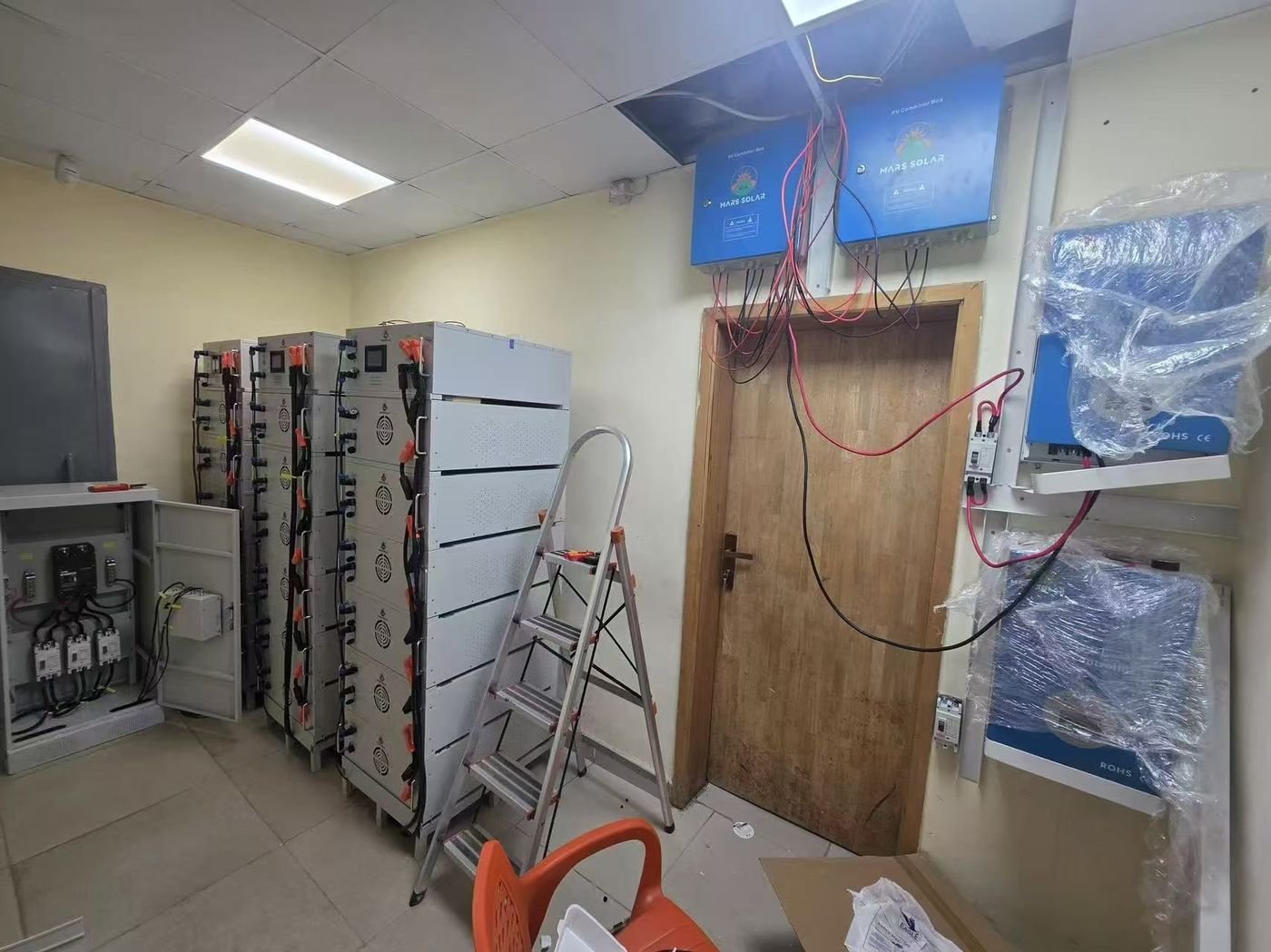
Three site realities shape Ghanaian specifications. Coastal salt and corrosion affect anything within reach of the sea breeze off Accra and Tema, so specify stainless hardware of the right grade and salt-mist-tested frames. Harmattan dust and seasonal haze cut usable yield outside the rainy months, which makes a written cleaning schedule part of the design rather than an afterthought. And roof structure matters: many commercial buildings were not designed with additional rooftop dead load in mind, so get a structural review before fixing ballast quantities.
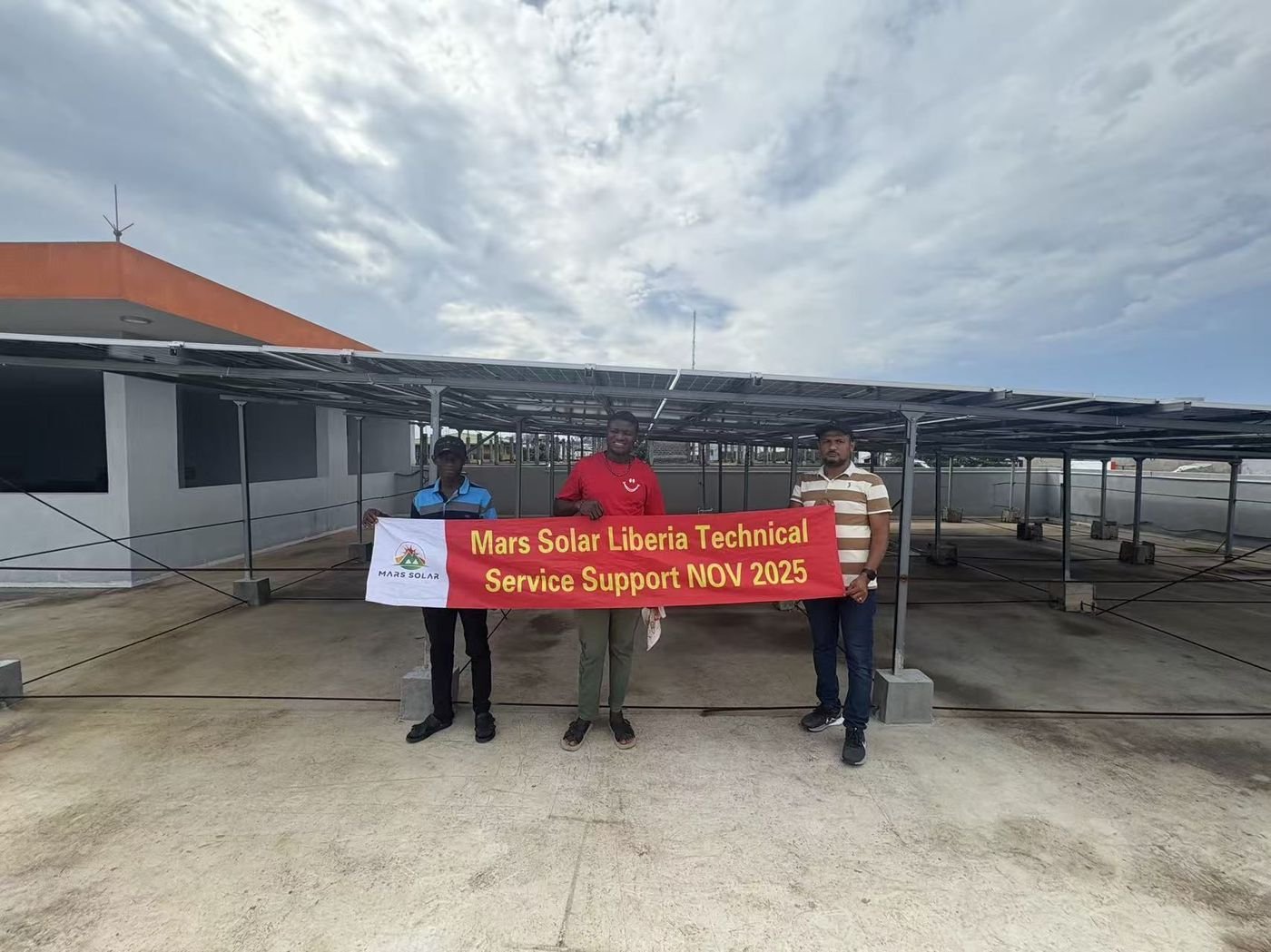
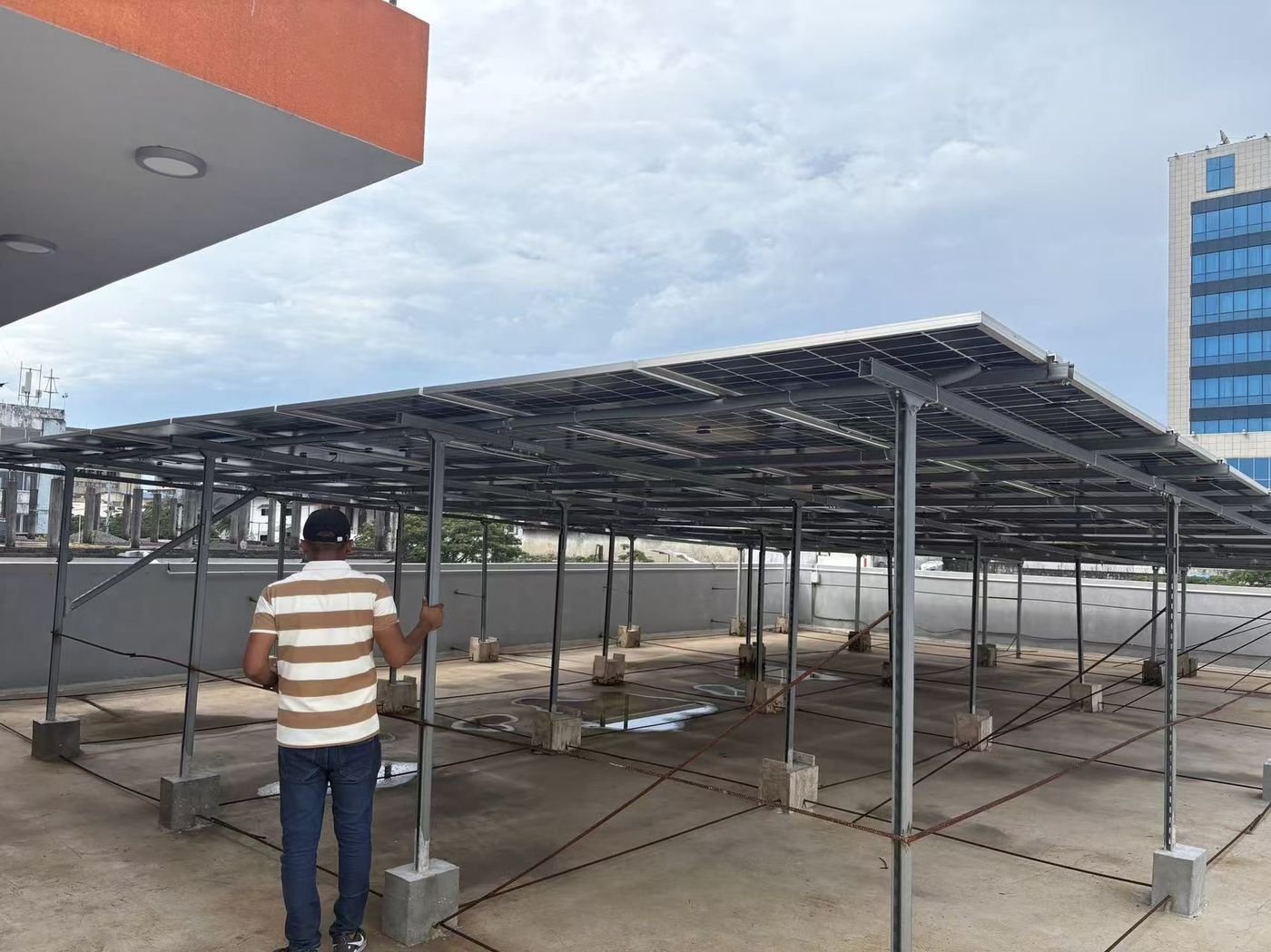
The closest reference to this work in our fleet is the 50 kW bank solar system delivered in Liberia — a West African commercial branch network where reliability, not headline savings, drove the design brief. Agro-processing buyers should also read our 200 kW rice mill solar case study, which is the closest analogue to a Ghanaian processing load. The hardware matching the model above is the 300 kW commercial solar system.