
If you model a commercial solar Nigeria project the way you would model one in Europe, you will conclude it does not work — and you would be right, because you modelled the wrong thing. At a metered tariff of about $0.049 per kWh, the grid will never repay your capital. What repays it is the diesel you stop burning, the production you stop losing to outages, and the downtime you stop paying for. Get the model right and Nigerian projects return faster than Philippine or Kenyan ones.
The Anchor Numbers That Decide Every Commercial Solar Nigeria Project
| Input | Planning value | Basis |
|---|---|---|
| Metered grid tariff | $0.049 / kWh | GlobalPetrolPrices, December 2025 — too low to drive payback on its own |
| All-in diesel generation cost | $0.25 to $0.40 / kWh | Industry range including fuel, lube, servicing and genset replacement — not a measured figure; replace with your own litres-per-hour logs |
| Specific yield (planning range) | 1,400 to 1,650 kWh / kWp / year | Nigerian planning range across the south and middle belt — confirm per site |
| Landed cost adder over CIF | +20% to +35% | Verified internal anchor: freight, duty, port charges, local installation |
| Storage share of system cost | 35% to 50% | Verified internal anchor |
| Module price (FOB China) | $0.28 to $0.48 / W | Verified internal anchor |
The gap between $0.049 and the diesel range of $0.25 to $0.40 is the entire opportunity. Every kilowatt-hour a Nigerian factory shifts from a genset to an array is worth roughly five to eight times what the same kilowatt-hour would be worth if it merely displaced grid purchases.
Clearing Customs: SONCAP and the Certificates Behind It
Every regulated product entering Nigeria goes through the SONCAP programme — the Standards Organisation of Nigeria Conformity Assessment Programme. In practice this means two documents: a Product Certificate obtained once per product line from an accredited body, and a SONCAP Certificate raised per shipment. Shipments arriving without the shipment-level certificate are subject to delay, testing and penalty at the port.
What you should demand from your supplier's documentation pack:
- IEC 61215 / IEC 61730 module test reports and IEC 62109 for inverters, IEC 62619 or UL 1973 for lithium batteries.
- Manufacturer's ISO 9001 — routinely requested as part of the Product Certificate application.
- A single window faciliation number traceability — your clearing agent will need the Form M and the Product Certificate reference to line up.
- High-temperature performance data, including NMOT rather than STC ratings, because Nigerian ambient temperatures are the norm rather than the exception.
Grid-side, any generation asset connected to the network interacts with Nigerian Electricity Regulatory Commission (NERC) rules, and larger or more complex arrangements may engage additional permitting. This area changes, so have your local counsel or consultant confirm the current requirements for your specific arrangement before you commit capital. The one thing worth stating plainly: most Nigerian C&I buyers install behind-the-meter systems precisely to stay out of those processes entirely, self-consuming everything they generate.
The sequential detail of getting this right is covered in our battery storage cost and import guide for Nigeria.
A Worked Payback: 500 kWp Plus 1 MWh at a Nigerian Processing Plant
Nigerian commercial loads are large and concentrated — rice mills, agro processors, beverage lines, factories running their own gensets. So we will model the larger of our two verified reference packages: a 500 kWp array with 1 MWh of storage.
Step 1 — Capital cost. Verified CIF range for 500 kWp plus 1 MWh is $390,000 to $480,000. Applying the 20% to 35% landed adder:
- Low case: $390,000 x 1.20 = $468,000 landed
- High case: $480,000 x 1.35 = $648,000 landed
- Sanity check on modules: 500 kW = 500,000 W x $0.28 to $0.48/W = $140,000 to $240,000 of that cost is modules alone
- Sanity check on storage: at 35% to 50% of system cost, the 1 MWh battery block is $136,500 to $240,000
Step 2 — Usable generation. At the planning yield midpoint of 1,525 kWh/kWp/year, a 500 kWp array yields 762,500 kWh a year. At 85% self-consumption that is 648,125 kWh actually displacing paid-for energy.
Step 3 — What that is worth. This is where Nigeria diverges from every other market on our list:
| What you displace | Cost avoided per year | Payback on $468,000 | Payback on $648,000 |
|---|---|---|---|
| Grid purchases at $0.049 / kWh | 648,125 x $0.049 = $31,758 | 14.7 years | 20.4 years |
| Diesel generation at $0.25 / kWh | 648,125 x $0.25 = $162,031 | 2.9 years | 4.0 years |
| Diesel generation at $0.40 / kWh | 648,125 x $0.40 = $259,250 | 1.8 years | 2.5 years |
So the honest operating range for a properly-sited Nigerian hybrid is roughly 1.8 to 4.0 years — fast, driven entirely by fuel you no longer buy. Remote and weak-grid sites where delivered diesel lands at the top of that range are the ones that reach the sub-18-month payback we quote for pure diesel-displacement duty. A site that currently buys little diesel and draws mostly from a metre should not expect that.
The corollary matters just as much: if your proposal does not name how much diesel you currently burn, it is not a proposal. Our diesel versus solar cost analysis for Nigeria works through the fuel accounting, and our off-grid versus hybrid versus on-grid comparison helps you pick the topology before you price anything.
What Actually Gets Specified
Nigerian hybrids almost always keep the genset. The solar-plus-storage system takes the base load and the daytime peaks, the genset becomes a rarely-used backup rather than a daily expense, and your fuel bill collapses rather than disappears. That means the battery must be sized for genuine autonomy, not for a token ten minutes.
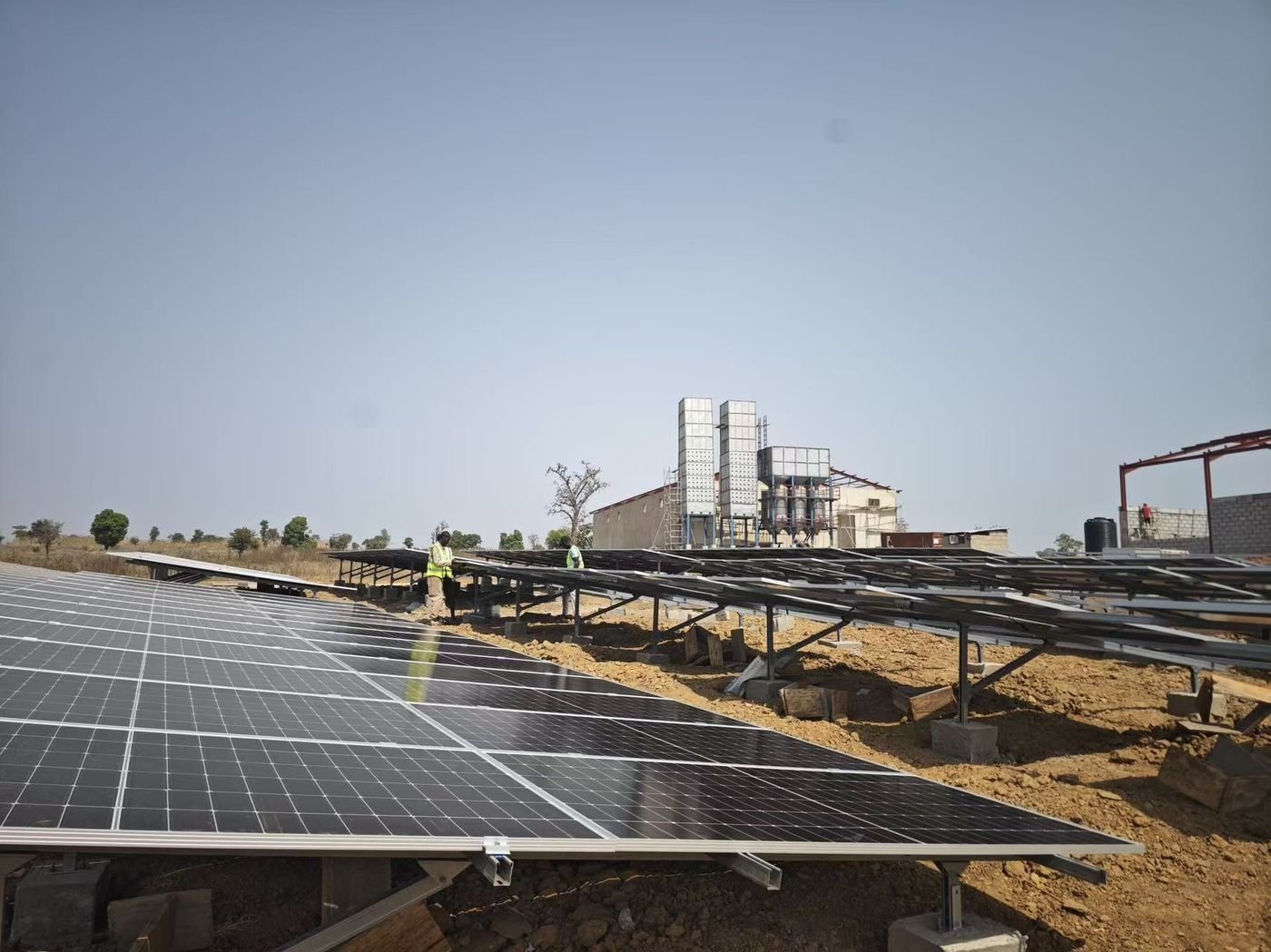
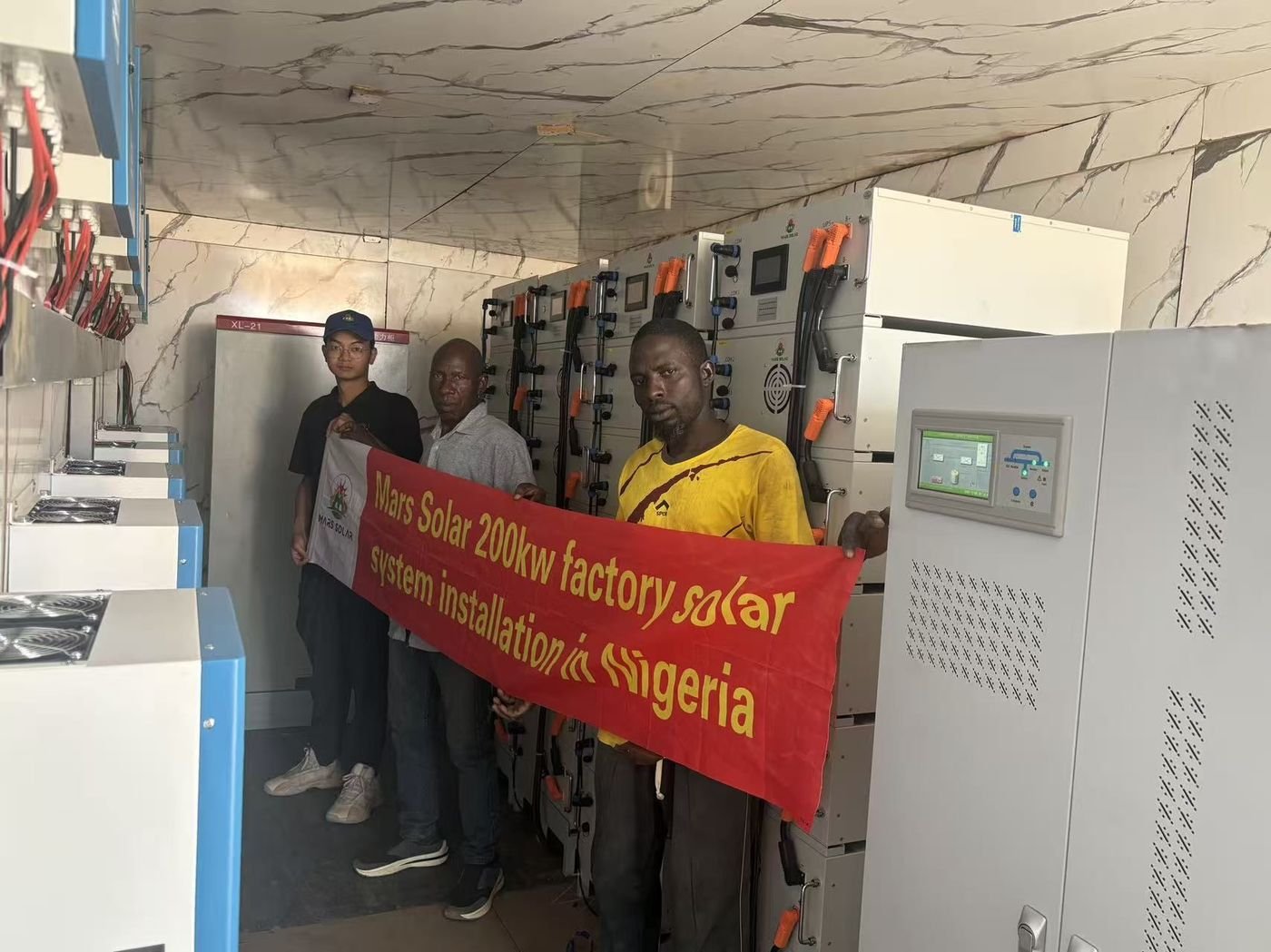
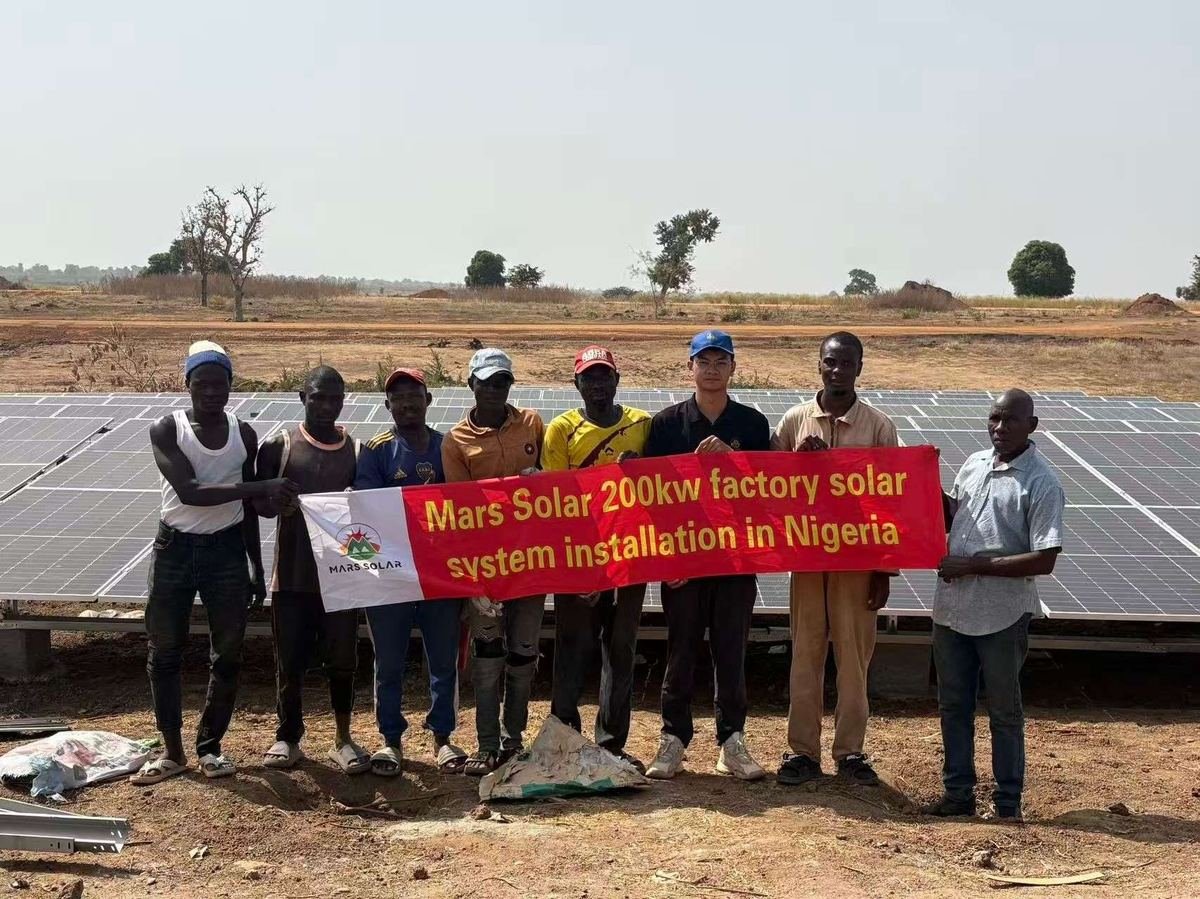
We built exactly this at the 200 kW rice mill solar project, where mill throughput — not the electricity line item — was the thing the customer was protecting. At the other end of the scale there is our 6 MW solar-plus-storage project in Nigeria. The hardware most often specified for the mid-market duty modelled above is the 500 kW commercial solar system.
Two specification notes specific to Nigeria. First, specify for heat — compare NMOT figures, not just STC peak watts, and check inverter derating curves above 45 degrees Celsius ambient. Second, specify for dust and harmattan: soiling losses across the dry season are real, so agree a cleaning regime and access walkways at design stage rather than discovering the problem in February.
Sizing a Commercial Solar Nigeria Project From the Generator Log
In every other market on our list the sizing exercise starts with twelve months of utility bills. That is the wrong input here. If diesel is your primary source, the bill that matters is the one your generator writes: how many hours each unit ran, at what load factor, how many litres you bought, and which motor starts landed at the worst possible moment. Size a commercial solar Nigeria project from any other document and you will mis-size the storage.
Read the generator log for four things: running hours per day, average load factor, litres consumed per day, and the largest single motor start. Those four numbers decide the peak kW the array must cover in daylight, the kWh the battery must carry when the grid drops, and the surge the inverter has to absorb — which is why every commercial solar Nigeria design starts here:
| Load type | Typical pattern at Nigerian sites | Sizing implication |
|---|---|---|
| Huskers, polishers, dryers (rice and agro-processing) | All day, heavy motor starting | Sets the inverter surge rating on a commercial solar Nigeria hybrid — check locked-rotor current before sizing anything |
| Cold rooms and chilling lines | 24 hours | Highest cost of interruption; size the battery for these first |
| Bottling and beverage lines | One or two shifts | Large but predictable, and well matched to the solar day |
| Office IT, lighting, gatehouse | Business hours | Small draw, cheap to back up, expensive to lose |
| Borehole pumps and irrigation | Daytime, deferrable | Move them into the solar window to lift self-consumption at zero hardware cost |
Then turn fuel into money so the model has teeth: litres per day x roughly 3 kWh per litre (a planning conversion for larger gensets — check it against your own unit's specific fuel consumption curve) gives the kWh you would displace per day, and multiplying by the $0.25 to $0.40 all-in band gives the spend you are replacing. That figure, not your grid tariff, is what a commercial solar Nigeria proposal should be built on, and it is the number to challenge if a quotation opens with a utility bill instead.
Three Commercial Solar Nigeria Configurations
Nigerian C&I projects land on one of three topologies, and the arithmetic for each traces back to the payback table earlier on this page — so you can audit which one any commercial solar Nigeria quote actually prices:
| Configuration | What it does | When it fits |
|---|---|---|
| Behind-the-meter hybrid | PV plus storage self-consumed on site; the genset is retained and demoted to insurance | The Nigerian default. Most commercial solar Nigeria buyers choose it precisely to stay out of grid-connection processes |
| True off-grid | No grid dependence at all; storage sized for full autonomy including bad-weather days | Weak or absent feeders — the highest storage cost and the highest certainty of any commercial solar Nigeria topology |
| Grid-tied, export or zero-export | Array feeding the network with minimal or no storage | Rarely the right answer here: at $0.049/kWh, displaced grid units repay nothing like diesel does |
The distinguishing feature of a commercial solar Nigeria hybrid is that the generator stays. Storage sized correctly turns it into an idle asset rather than a daily expense — which is why autonomy, spelled out in the next section, matters more in commercial solar Nigeria work than in any other market we serve. Our off-grid versus hybrid versus on-grid comparison walks the topology decision before you price anything.
Autonomy: The Arithmetic Behind Nigerian Backup Hours
Backup means different things across the markets we serve, and in a commercial solar Nigeria project it means deciding how much fuel you no longer buy. So buy storage in hours, and do the arithmetic in hours:
Runtime = usable battery kWh ÷ backed-up load kW
Applied to the 1 MWh block in the payback model above, at nameplate — the size most often specified in commercial solar Nigeria work at plant scale:
| Backed-up load | Runtime on 1 MWh nameplate | Worked as |
|---|---|---|
| 25 kW (chillers, offices, IT) | ~40 hours | 1,000 ÷ 25 |
| 50 kW (process line plus services) | ~20 hours | 1,000 ÷ 50 |
| 100 kW (half the plant) | ~10 hours | 1,000 ÷ 100 |
| 200 kW (full plant, services included) | ~5 hours | 1,000 ÷ 200 |
Derate before any of these reach a spreadsheet: usable capacity sits below nameplate, and the inverter's continuous rating caps the island panel — which is why a 430 kWh bank at a rice mill serves named loads (huskers, dryers, their motors) rather than the whole facility. Run the commercial solar Nigeria autonomy calculation twice, at nameplate and at usable capacity, against your own load list, and buy hours rather than kilowatt-hours.
The test is simple: if the battery cannot carry the plant through a normal grid event without starting the genset, you bought ride-through, not autonomy. At our Keffi mill, 430 kWh took over from diesel as the primary reserve. At our Lagos complex, 20 MWh against 6 MW is about 3.3 hours at rated array output — deliberately enough to shift the evening peak, not enough to run the site off-grid. Same country, two correct answers, and the difference is the single most important variable in a commercial solar Nigeria design.
Behind-the-Meter or Connected: DisCo and NERC Rules for Nigerian Sites
Two regulators sit on either side of a Nigerian installation, and knowing which one governs what saves weeks on any commercial solar Nigeria shipment. The Standards Organisation of Nigeria governs whether your equipment is allowed into the country at all; the Nigerian Electricity Regulatory Commission (NERC) governs anything connected to the network. The current regulatory framework is published at nerc.gov.ng, and product conformity runs through the SONCAP programme.
In practice this pushes most commercial solar Nigeria decisions toward behind-the-meter: generate on your own side of the meter and consume everything yourself, which is also why most commercial solar Nigeria buyers never touch the export question at all. Nothing is worth exporting at $0.049/kWh, so self-consumption does all the work — and that is also why "keep the genset" is the standard answer, with the hybrid sitting between your load and your existing switchgear.
Grid-connected arrangements exist, and some sites have a reason to want them, but for a commercial solar Nigeria project they add metering, protection and approval steps that lengthen the timeline. Ask your distribution utility (your DisCo) what applies to your supply before the design is frozen — retrofitting a different export arrangement after commissioning is the expensive version of that conversation.
Whatever commercial solar Nigeria topology you land on, keep one folder clean: Form M, the Product Certificate reference and the shipment-level SONCAP Certificate, all cross-referenced. Clearance quality is decided in that folder, not at the port.
Installation Cost Checklist for a Commercial Solar Nigeria Container
The 20% to 35% landed adder over CIF is a specific list, not slack: on a commercial solar Nigeria container it runs freight, duty, port charges, clearance, local installation and commissioning, in that order. Budget them individually and any commercial solar Nigeria quote becomes line-by-line auditable. For the 500 kWp plus 1 MWh reference package, $390,000 to $480,000 becomes $468,000 to $648,000 landed — here is what sits inside that spread:
| Cost block | What it covers | Notes |
|---|---|---|
| CIF hardware | Modules, hybrid inverters, battery cabinets, structure, cabling, protection | Modules alone are $140,000 to $240,000; the 1 MWh battery block $136,500 to $240,000 |
| Freight, port charges, duty | Sea freight to Lagos or your discharge port, terminal handling, import duty | A deep-sea leg plus Nigerian port costs typically lands above a short regional voyage |
| SONCAP and clearance | Product Certificate, shipment-level certificate, clearing agent | Paperwork quality, not freight, decides whether clearance is routine or painful |
| Local installation | Foundations, mounting, DC/AC wiring, switchgear and genset tie-in | The tie-in to existing switchgear and the changeover arrangement is where much of the commercial solar Nigeria site time goes |
| Commissioning | Protection settings, testing, performance verification against the model | Verify against the model you were sold, not against nameplate |
Outside the supplier's number — owner-side in most commercial solar Nigeria contracts — sit the earthworks and fencing, site security, any internal distribution upgrade behind your main panel, and the Distribution Company's application if you do connect. Ask for the split explicitly: a single bundled figure makes two commercial solar Nigeria quotations impossible to compare.
Case Evidence: Two Nigerian Sites, Two Scales
Both topologies above exist in our own Nigerian reference list, so a commercial solar Nigeria buyer can see the arithmetic as built rather than modelled:
| Metric | 200 kW rice mill, Keffi | 6 MW industrial complex, Lagos |
|---|---|---|
| System | 200 kWp + 430 kWh | 6 MWp + 20 MWh |
| Paid-for energy displaced | Diesel first, grid second | Grid draw plus diesel backup |
| Monthly saving | $8,000+ against a $5,000 to $11,000 fuel bill | $108,000+ |
| Payback | 14 months | about 24 months |
| Installation | 10 days, Mars Solar engineers on site | Containerised, factory pre-tested blocks |
| Outcome | Diesel demoted from primary source to backup | 92% of backup runtime moved to the battery |
Two details generalise into any commercial solar Nigeria model and are worth carrying into your own. First, the Lagos complex recorded 15 to 20 grid interruptions a month and was spending roughly $38,000 a month on diesel backup on top of a grid bill above $140,000 — so that project's economics rest on production continuity, not on tariff spread. The same site's recorded cost for diesel backup was about $0.45 per kWh, above the low end of the all-in band above, because emergency backup usually runs at poor load factor: the worse a genset is loaded, the more each kilowatt-hour costs you.
Second, scale changes what the storage is for, and it is the variable most often glossed over in commercial solar Nigeria proposals. At 430 kWh the battery genuinely replaced diesel as the primary reserve; at 20 MWh against 6 MW it buys roughly 3.3 hours at rated array output — a peak-shifting asset that also rides through grid events. Neither answer is wrong for commercial solar Nigeria duty, and any quotation should be able to tell you which one it is selling you.
How a Commercial Solar Nigeria Project Is Delivered and Supported
The sequence below is how these projects actually run, and each step gates the next — which is where most commercial solar Nigeria timeline risk comes from:
- Design and quotation — 24 hours. Send genset logs rather than a utility bill: litres per day, running hours, peak kW. Design and quotation come back within 24 hours, sized against the fuel you actually buy.
- Engineering pack. NMOT rather than STC ratings for commercial solar Nigeria heat, inverter derating curves above 45 degrees Celsius, Cleaning access for dust and harmattan, and the certification file: IEC 61215 / 61730 modules, IEC 62109 inverters, IEC 62619 or UL 1973 cells, ISO 9001.
- Production and Product Certificate. Lead time is usually dominated by production and certification paperwork, not by sailing time.
- Shipping to Lagos. Containerised and factory pre-tested wherever the package allows; multi-MW blocks ship as synchronised containerised units.
- SONCAP clearance. Product Certificate and shipment-level certificate lined up with Form M before the vessel lands, not after — the step that decides whether a commercial solar Nigeria container clears in days or sits.
- Installation, commissioning, handover. The 200 kW rice mill was installed in ten days with Mars Solar engineers on site; projects above roughly 200 kW carry two to four resident commissioning engineers through the installation window.
After handover, spares and warranty support run through the same project channel — agree the response commitments in the commercial terms during contracting rather than assuming them. The first step costs nothing: send the genset log and let a commercial solar Nigeria design come back modelled on your own fuel.